★ 4.6
Recurring hamstring injury: preparing for reassessment

Prepare for reassessment of recurring hamstring symptoms with an episode-by-episode record. No home test, diagnosis or fixed recovery schedule.
FREE 10-WEEK TRAINING PROTOCOLSend my free protocol ↓If your hamstring injury keeps coming back, arrange an appointment with a doctor or physiotherapist and take a record of your previous symptoms. For each episode, note where and when it began, what you could do afterwards and the activity during which things went wrong again. Seek prompt medical help for severe or increasing pain, substantial swelling or difficulty walking; do not wait until your record is complete.
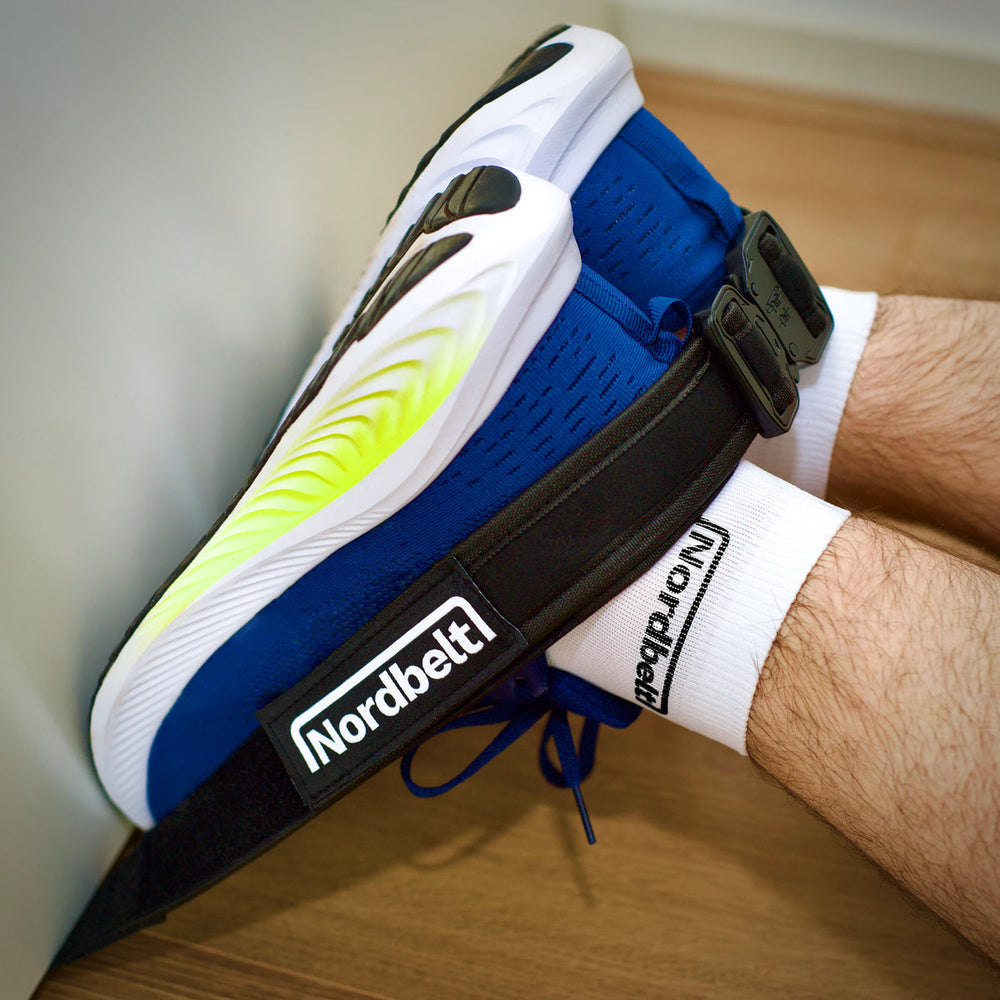
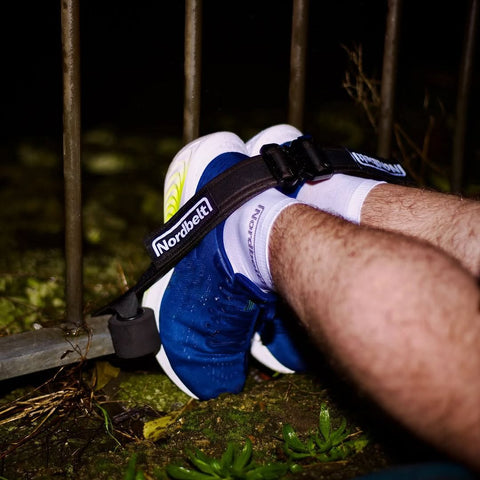
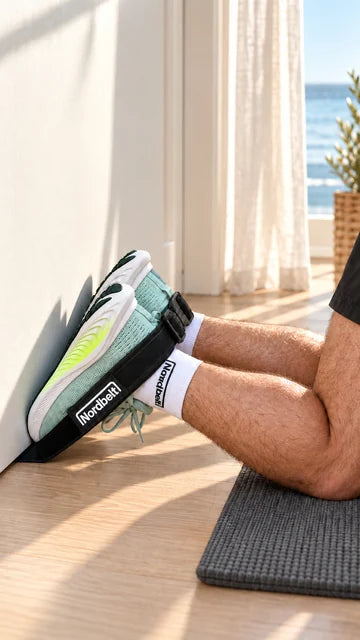
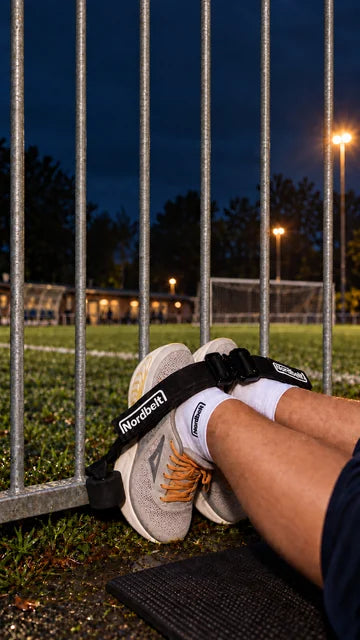
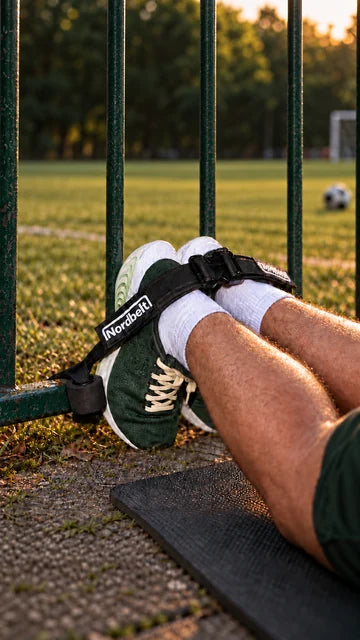
Any later strength progression is a separate step. How Nordbelt works for Nordic curls at home: it provides ankle fixation without a training partner or large machine, provided you use a suitable anchor. This only becomes relevant when the exercise fits your assessed training plan. The equipment neither investigates nor treats an injury and does not determine whether you can return to sport. You do not need to buy anything for a reassessment.
Why seek another assessment?
If your hamstring injury keeps recurring, simply restarting the same programme does not answer every question. Explain whether you had a symptom-free period between episodes or whether this has really been one continuing problem. You do not need to decide for yourself whether it is the same injury. That uncertainty is useful information for the appointment.
A clinical review stresses that hamstring assessment requires a thorough examination and loading progressed to suit the athlete. It is a narrative review for clinicians, not research that can establish the cause of your recurring pain remotely (Hickey et al., 2022).
The existing guide to recovery after a hamstring injury covers recovery milestones. Here, you are preparing something different: a comparison of several episodes, so you do not have to describe only the most recent training session.

Make a short record of each episode
Use a notebook or a note on your phone. Start with the first episode you can reconstruct reasonably well and add later ones below it. An approximate month or a question mark is better than inventing a precise date. This structure is a practical conversation aid, not a validated questionnaire, diagnosis or return-to-sport score.
- Onset and location. When did it begin, which leg was affected and where did you feel it? You might describe a spot high below the buttock or lower down the back of the thigh, without assigning a tissue name yourself. Was there a clear moment or did it build gradually?
- Activity and change. What were you doing, and what had changed shortly beforehand? Record only what you know: different training, more matches or a longer break. A change preceding symptoms does not prove that it caused them.
- Everyday function. What did you notice during ordinary walking, sitting or climbing stairs? Say whether symptoms appeared during an activity, later that day or the following morning. Do not perform a painful movement to fill an empty entry.
- Previous assessment and advice. Who saw you, what explanation were you given and what was agreed? Add available reports. Also note when something was not assessed or when you no longer remember the explanation.
- Return to loading. Which activity became possible again, what step followed and when did symptoms return? Distinguish easy movement, strength training and faster sporting actions. Record what actually happened, not what a programme said you should have been able to do.

Illustration of everyday movement; climbing stairs is not presented here as an exercise recommendation or a test of recovery.
Bring your previous plan, even if it is unfinished
Show which exercises or sporting activities you actually did. An incompletely followed programme is useful information; there is no need to make it look better. You might mention an exercise you could not perform, a change in work shifts or stopping when symptoms returned. Ask which parts need reassessment.
Bring existing investigation reports if you have them. A scan from an earlier episode does not describe every later symptom. Ask what the old report does and does not tell you now. For the separate imaging question, see the guide to ultrasound or MRI for a hamstring injury.
Take your Nordic curl from the first rep to week 10.
A concrete 7-page plan: build up week by week, without pushing too fast.
PDF7 pagesStraight to your inbox
- 01A clear week-by-week progression
- 02Technique and the mistakes to avoid
- 03A simple log you will actually use

Open the download page again or check the email we sent you.
Open the download page ↗≤ 51%
✓Backed by research
Van Dyk et al., 2019: meta-analysis of programmes with NHE. Not an effect test of Nordbelt or this protocol.
Which questions help at the new appointment?
Put your record alongside your current question. For example: “I could run gently again, but symptoms returned after moving to faster work. What information is still missing and what should we agree until the next assessment?” This is a fictional conversation example, not an explanation for every recurrence.
Then ask what needs examining again, which activities you can discuss for the meantime and who will monitor progress. Ask which changes should prompt earlier contact. Make the eventual sporting task clear: an easy distance run poses a different question from a match involving acceleration, braking and turning.
An international Delphi study recommends an individual approach considering the athlete, sporting demands and injury type. Experts did not reach agreement on some fixed strength and flexibility benchmarks. This is expert consensus, not proof that one test or a general calendar can safely clear you for sport (Paton et al., 2023).
If symptoms return during running, the existing page on hamstring injuries in runners offers further context. Use it to formulate questions, not to replace the new assessment.

Illustrative conversation between two athletes; no medical assessment or actual patient situation is shown.
Later training needs a separate discussion
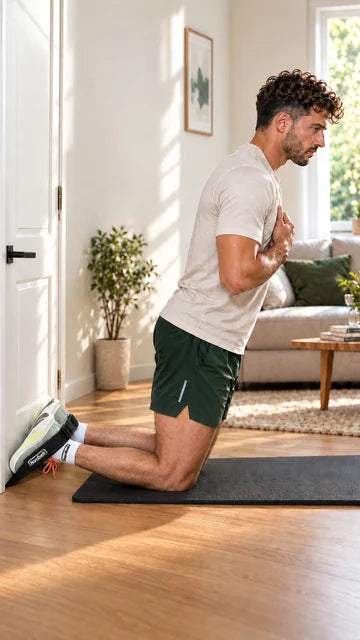
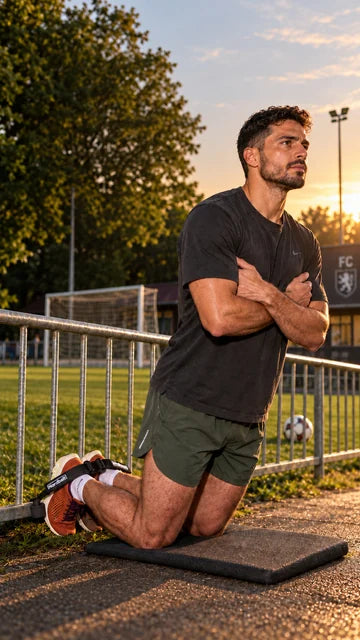
A Nordic curl is not a home test to check whether your injury has resolved. You kneel with your ankles fixed and lower your body forwards under control while the hamstrings brake the movement. Discuss whether and how it fits your own loading plan; this article prescribes no starting week, sets or repetitions.
If Nordic curls are appropriate later, Nordbelt can fix the ankles to a suitable closed door, stable bench or secure fence. Not every anchor is suitable: check the setup against the instructions, use appropriate knee support and the agreed assistance. A stable setup is not medical permission to train through symptoms.
Frequently asked questions
Should I wait for another recurrence before seeking help?
No. You do not need to provoke symptoms again to justify an appointment. Discuss recurring or persistent symptoms and describe what has already happened. Seek prompt medical help for severe or increasing pain, substantial swelling or difficulty walking.
Is it definitely the same hamstring injury again?
You cannot establish that from the sensation or location alone. Note what seems similar or different, but leave interpretation to the professional. An episode record organises your account; it does not distinguish possible causes or replace an examination.
Does reassessment always require a new scan?
Not automatically. Bring previous reports and ask what uncertainty remains after the history and physical examination. Additional investigation should address that clinical question. The fact that symptoms recur does not, by itself, determine which scan is needed.
What if I do not know my previous training load precisely?
Write down what you know and mark the rest as unknown. A general description such as “back in team training, but not yet a full match” may be more useful than invented distances or weights. Bring an existing log, but do not delay seeking help to reconstruct missing data.