

Pain at the back of the thigh under the buttock: what commonly fits?


Pain at the back of your thigh just under the buttock often feels different from ordinary muscle soreness in the middle of the hamstring. If the discomfort sits high, remains nagging or becomes noticeable while sitting, bending forward or driving for a long time, the area around the tendon attachment may be involved. That is not a diagnosis from a distance, but it is an important pattern. This article explains what commonly fits, what you can try first and when an assessment is sensible.
In short
When the pain is mainly high under the buttock, it often fits less well with a classic acute muscle tear in the middle of the thigh. Research on proximal hamstring tendinopathy and attachment complaints describes a distinct pattern: pain high up, often dull, and sensitive to sitting, bending or repeated loading (Goom et al., 2016; Dizon et al., 2023).
Why this area often feels different from ordinary hamstring pain
An injury in the middle of the muscle usually feels different from pain high near the sitting bone or just below the buttock. People with high pain more often describe it as:
- deep and nagging
- sharp after prolonged sitting
- pulling when bending forward
- present without a clear sprint or misstep

The location matters, not because an online label is useful, but because the pattern influences which loading choices are logical.
Which patterns are common with pain under the buttock?
1. Sitting is noticeably uncomfortable
This is common with complaints around the proximal hamstring tendon or its attachment. It is not present in everyone, but it is a frequent feature.
2. Stretching does not really help
Many people stretch more, even though a deep stretch can irritate this area instead of settling it.
3. The complaint developed gradually
There is not always a clear sprint or awkward step. It may follow a period of high training load, hill work, sprinting or long hours of sitting alongside training.
4. The pain is high, not in the middle of the muscle
That difference in location is one of the clearest reasons to look at the complaint differently.
If sitting is a strong trigger, also read pain at the back of the thigh while sitting.
What can you try first?
Aggressive solutions are rarely the best first step. A sensible starting approach is:
- temporarily reduce the activities that directly provoke the pain
- break up long periods of sitting more often
- scale back deep, provocative stretching for now
- find light tension or exercise that remains tolerable

The goal is not zero load, but better chosen load. With this type of complaint, doing too much can be as unhelpful as returning to heavy training too early.
When is an assessment sensible?
Seek an assessment sooner if:
- the complaint persists without clear progress
- pain is also noticeable at rest or at night
- sitting, bending or walking becomes increasingly limited
- it is unclear whether the main source is the hamstring, buttock, back or a nerve
- strength clearly decreases or the pain radiates in an unusual way
This page helps you recognise a pattern, but it does not replace a medical assessment.
How do you build up again later?
When the irritation settles, the focus shifts to controlled progression. Start with light, well-tolerated tension and move only later to heavier eccentric or sport-specific loading. This matches recommendations from reviews on conservative care and progressive rehabilitation for proximal hamstring complaints (Dizon et al., 2023).
The following next steps may then be useful:
- hamstring tendinopathy: symptoms, treatment and recovery
- persistent pain at the back of the thigh: causes and first steps
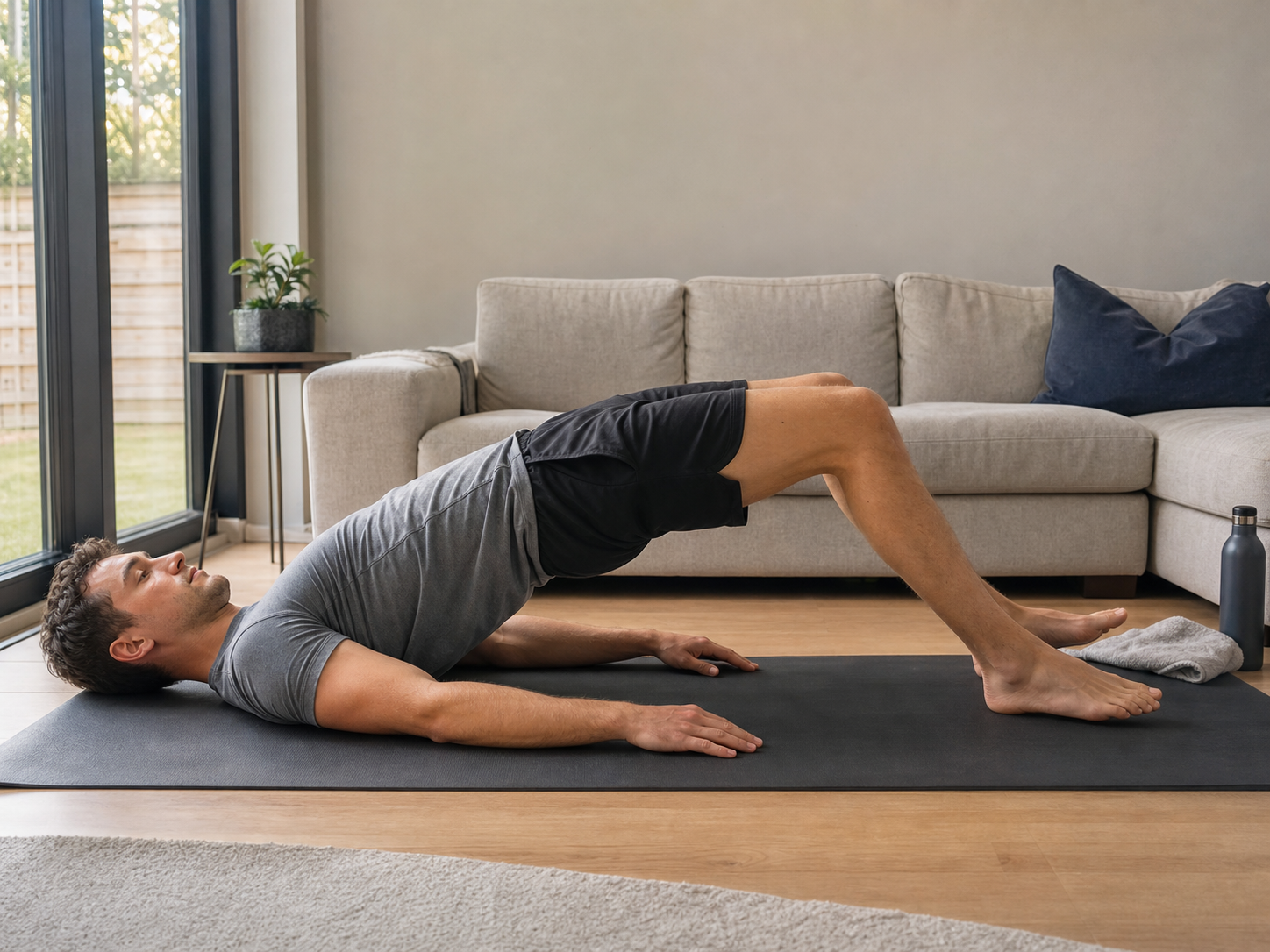
- only later use the how-to guide when you are ready for structured strength progression
Frequently asked questions
Does pain under the buttock always mean a hamstring tendon problem?
No. It is a pattern that often fits, but it is not a diagnosis from a distance. Other structures can also cause pain in this area. Pattern recognition is useful, while an assessment may still be needed.
Why can sitting feel worse than walking?
This is common with complaints high around the sitting bone or tendon attachment. Sitting places pressure or tension on that area, while gentle walking may provoke it less directly.
Is stretching good or bad?
That depends on the pattern. Deep stretching can make this particular area more irritable. If stretching consistently feels sharper rather than relieving, it is usually not a helpful signal.
When does strength training make sense again?
When the irritation is less reactive and light loading is tolerated better. You can then rebuild tension gradually and only later return to heavier hamstring training.