

Hamstring exercises for bouldering: stronger heel hooks, presses and landings


Hamstring exercises for bouldering should match heel hooks, high foot placements, controlled pressing, drops and landings. General curls alone miss the climbing context. Useful hamstring training for bouldering combines hip strength, knee flexion, single-leg control, eccentric braking and calm Nordics that you do not place right before a hard project session. Start with control and small volumes, then increase difficulty before you increase the whole week.
Key points
Bouldering asks a lot from the hamstrings when you set a heel, keep a high foot on, pull the hip towards the wall or land after an attempt. Bouldering injuries are not limited to fingers and shoulders; emergency department data also show lower-limb load in boulderers (Muller et al., 2022).
Use this article as a sport-specific addition to the broader guide to hamstring exercises. The order is simple: position control first, then strength, then Nordic progression and weekly planning around climbing.
Why hamstrings work differently in bouldering
In bouldering the hamstring is not only a running or jumping muscle. It helps keep the foot active on a hold, draws the pelvis towards the wall and stabilizes the body during a heel hook.
A review on acute hamstring injuries in climbers describes how the heel-hook technique can heavily load the hamstrings and the muscle-tendon junction, and how climbers need eccentric, concentric and isometric strength for this position (Ehiogu et al., 2020). A climbing-specific paper also describes the heel hook as a technique that can injure the leg when the demand is too high (Schoffl et al., 2016).
That does not make every heel hook dangerous. It means that stronger bouldering hamstrings should be able to pull, brake and hold without asking the hip, back or knee to rescue every position.

Which hamstring training should bouldering start with?
Choose exercises that make your climbing positions cleaner first. If a strength block makes your warm-up stiff or every hook feels tight, the dose was probably too high or too close to climbing.
- glute bridge with heel pressure
- hamstring walkout
- hip hinge with a dowel
- single-leg Romanian deadlift
- hamstring slider curl
- split squat with a slow lowering phase
- assisted Nordic hamstring curl
- full Nordic hamstring curl
For most boulderers, steps 1 to 5 are enough to build better control. Steps 6 to 8 are heavier and should not sit directly before the hardest project night.
Take your Nordic curl from the first rep to week 10.
A concrete 7-page plan: build up week by week, without pushing too fast.
- 01A clear week-by-week progression
- 02Technique and the mistakes to avoid
- 03A simple log you will actually use

≤51%
✓Backed by research
Van Dyk et al., 2019: meta-analysis of programmes with NHE. Not an effect test of Nordbelt or this protocol.
Open the download page again or check the email we sent you.
Open the download page ↗The 7 best bouldering hamstring exercises
Use these as building blocks. You do not need all of them in one week; choose two or three that fit your current climbing volume.
1. Glute bridge with heel pressure
Lie on your back, push through the heels and lift the hips while keeping the ribs quiet. This is a low-threshold start when the hamstrings feel stiff after climbing.
2. Hamstring walkout
Start at the top of a bridge and walk the heels away in small steps. Keep the hips high and stop before the lower back takes over.
3. Single-leg Romanian deadlift
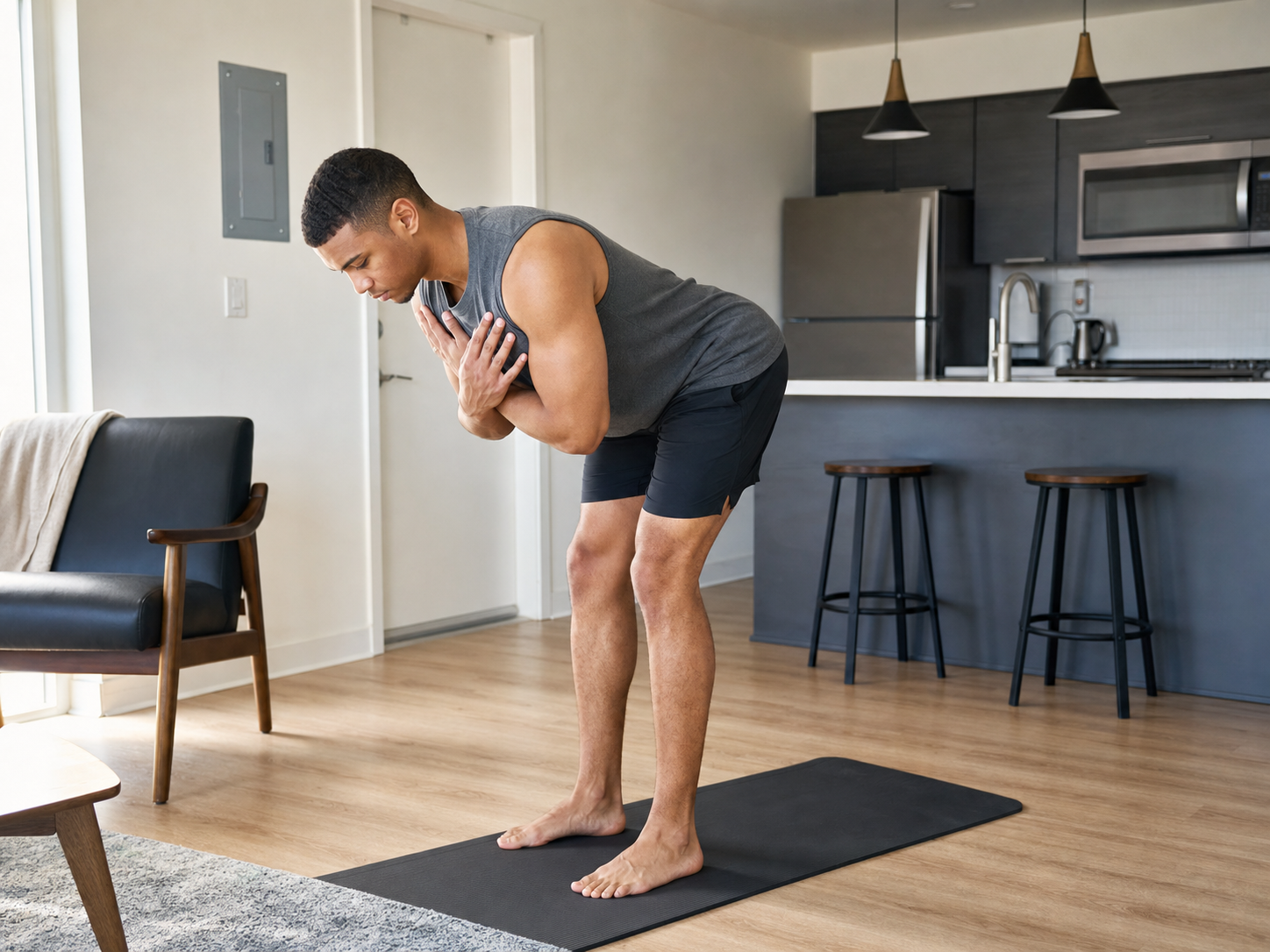
Stand on one leg, move the hip back and let the torso hinge forward. It trains foot pressure, hip control and trunk control together.
4. Hamstring slider curl
Lift the hips, slide the heels away and pull back while the technique stays clean. This is a useful bridge towards heavier eccentric work; compare variants in the guide to hamstring slider exercises.

5. Assisted Nordic hamstring curl
Anchor the ankles low, keep the trunk long and lower slowly. Use the hands, a band or a short range so the reps stay controlled.
6. Isometric heel-hook hold
Place the heel on a low bench or box and pull lightly as if bringing the hip towards the heel. Hold 10 to 20 seconds at low intensity.
7. Step-down and landing control
Train low controlled landings through ankle, knee and hip. This is not a pure hamstring move, but it prepares the context where the hamstrings must help.
Nordic hamstring for bouldering: when and how heavy?
The Nordic hamstring curl is useful, but more Nordics are not automatically better for bouldering. Prevention programs that include the Nordic hamstring exercise can lower hamstring injury incidence in sport settings (van Dyk et al., 2019). A large football study also found fewer acute hamstring injuries after a progressive eccentric program (Petersen et al., 2011).
For boulderers, use the Nordic as one strong building block, not as the whole plan. Heel hooks also need pulling strength and holding strength in bent positions.
- once per week
- 2 sets of 2 to 4 assisted reps
- lower slowly and catch with the hands
- stop when technique breaks
- do not schedule it the day before the hardest session
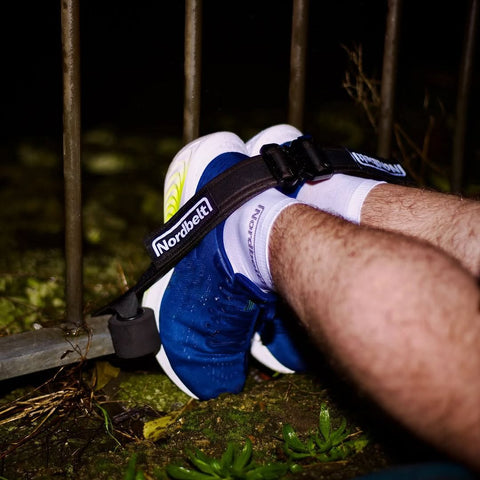
For technique details, use the guide to the Nordic hamstring curl. If you train alone, a fixed low ankle anchor helps make the movement repeatable. The Nordbelt how-to guide shows the setup checks; the Nordbelt product page is the product page.
Hamstring training in a climbing week
The largest mistake is timing, not exercise choice. Hard attempts, hooks, drops and repeated tries count as load even when the session feels technical.
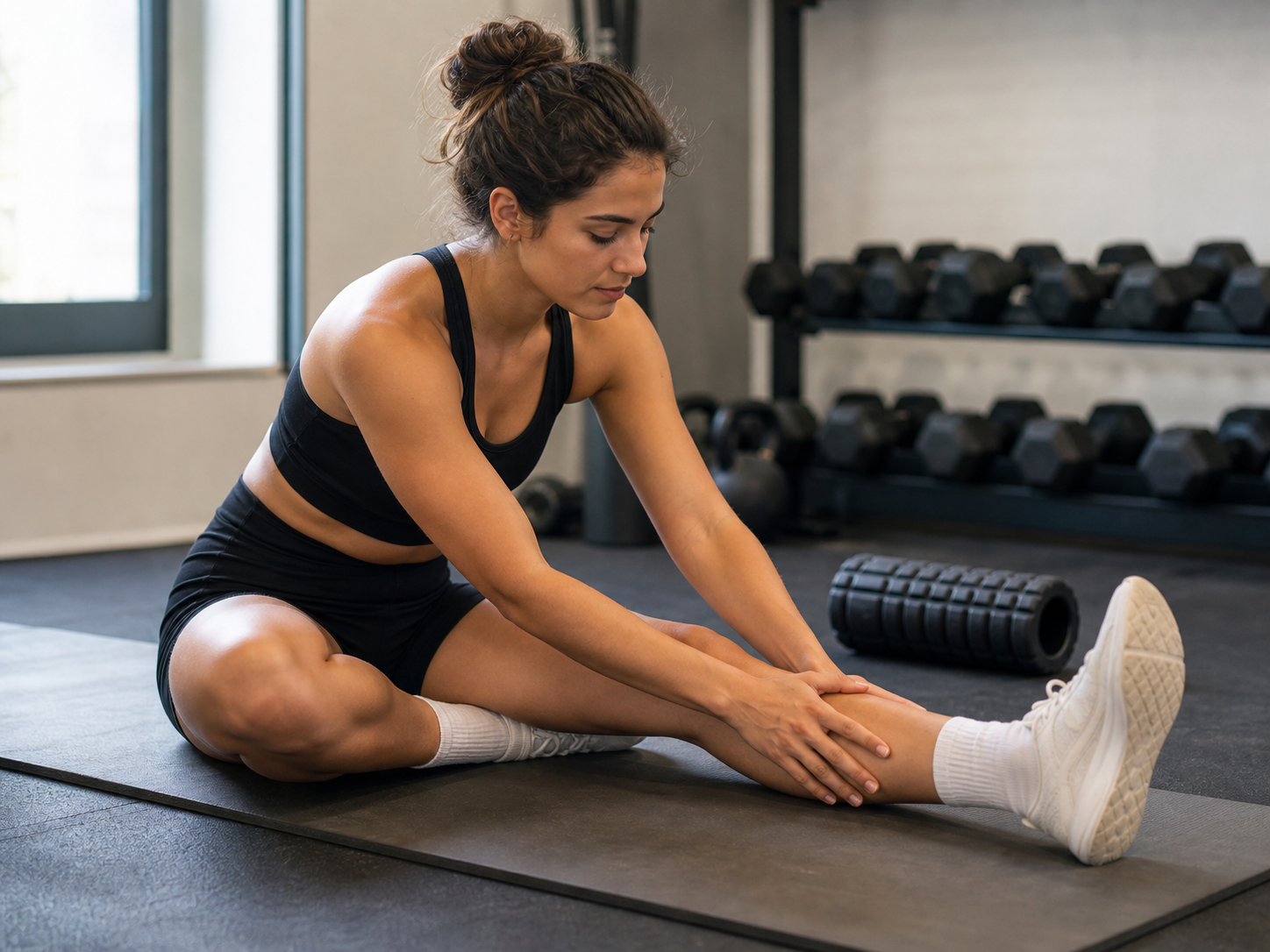
- after an easy climbing session: bridges, hinges or sliders
- on a separate strength day: assisted Nordics and single-leg strength
- before a hard project session: no new heavy hamstring stimulus
- after a competition or very hard session: recover first, then train strength
Many recreational boulderers do better with two short blocks than with one large session. You can combine this with eccentric hamstring exercises, but keep the total dose honest.
Managing hamstring injury risk in bouldering
You cannot fully prevent hamstring injuries in bouldering. You can lower risk by preparing the hamstrings for pulling with the heel, high foot placements, controlled descents and landings.
Sharp pain during a heel hook, high posterior-thigh pain, clear strength loss or pain that returns every attempt is not a reason to stretch harder. Reduce load and seek assessment when pain is acute, recurrent or changes normal movement.
FAQ
Which hamstring exercises for bouldering matter most?
Bridges, walkouts, single-leg Romanian deadlifts, slider curls and assisted Nordics are the core. Add light isometric heel-hook holds only when the position is pain-free.
Does the Nordic hamstring curl fit bouldering?
Yes, but not as the only exercise. Nordics build eccentric strength, while bouldering also needs pulling and holding strength in heel-hook positions.
How often should I train hamstrings next to bouldering?
For most boulderers, one or two short sessions per week is enough. Put heavier work away from the most important climbing session.
Can hamstring injuries in bouldering be prevented?
Not guaranteed. Gradual strength, smart heel-hook dosing, controlled landings and honest recovery can improve risk management.