

Train your glutes at home: 7 exercises without equipment


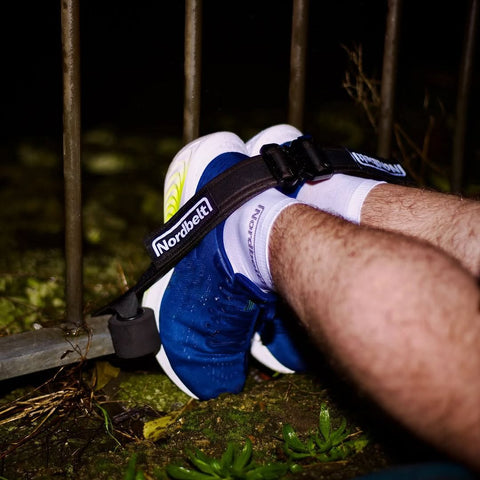
“Nordbelt is easy to secure and feels stable.”
You can train your glutes effectively at home without equipment by choosing exercises that extend the hips, control the pelvis and become progressively harder. Start with glute bridges, hip hinges, step-ups and split squats before moving to heavy or explosive variations. Train two or three times per week, let technique lead and increase repetitions or tempo before adding resistance. This article gives you a practical starting plan with seven exercises and explains the link with hamstrings and later Nordbelt training.
In short
Building stronger glutes at home is not about collecting as many random exercises as possible. Combine hip extension, single-leg control and gradual progression. The gluteus maximus works hard during hip extension, while the gluteus medius helps control the pelvis and knee. EMG research shows that exercises such as the single-leg squat, single-leg deadlift and side-lying hip abduction can create high gluteal activation (DiStefano et al., 2009).
Better glute strength, hamstring capacity and hip control make posterior-chain training more predictable. For a broader programme alongside this glute focus, use the guide to hamstring exercises at home as your next step.
Glute exercises at home
The best home glute exercises are not necessarily the hardest. They are repeatable and allow you to feel the hips working without the lower back taking over. For most beginners, this order works well:
- glute bridge
- single-leg bridge hold
- bodyweight hip hinge
- reverse lunge
- low step-up
- split squat
- hamstring walkout or slider curl as a later bridge
Start with two or three exercises per workout. Doing all seven immediately makes it difficult to see which step helps and which one only adds fatigue. Short, consistent sessions work better.
A simple first workout:
- glute bridge: 3 × 10
- reverse lunge: 2 × 8 per side
- hip hinge: 2 × 10 at a calm tempo
- side plank or side-lying hip abduction: 2 × 20 to 30 seconds per side
Keep every repetition controlled. Make the movement smaller or slower if you mainly feel the lower back working or if the knee repeatedly collapses inward.

Training glutes without equipment
Training without equipment means using leverage, tempo, single-leg variations and pauses intelligently. Before adding bands, dumbbells or machines, change one factor:
- lower for three seconds
- pause and squeeze for two seconds at the top
- increase the range only while control remains good
- move to a single-leg version only after the two-leg version is stable
- add sets only when recovery remains good
A systematic review of gluteus maximus activation shows that hip-extension exercises and external load can create high activation, but exercise choice, execution and load all matter (Neto et al., 2020). At home, first make bodyweight work harder before deciding you need equipment.
The hip thrust is popular because it makes hip extension clear. An EMG comparison found higher gluteus maximus and biceps femoris activation during a barbell hip thrust than a back squat in trained women at a 10RM load, but that does not mean every beginner needs heavy hip thrusts (Contreras et al., 2015). Use the principle: extend the hips, keep the pelvis stable and build gradually.
Take your Nordic curl from the first rep to week 10.
A concrete 7-page plan: build up week by week, without pushing too fast.
- 01A clear week-by-week progression
- 02Technique and the mistakes to avoid
- 03A simple log you will actually use

≤51%
✓Backed by research
Meta-analysis of randomised trials of the Nordic Hamstring Exercise.
Open the download page again or check the email we sent you.
Open the download page ↗Making your glutes stronger at home
Progress needs to be sustainable. One common mistake is repeating the same easy bridge for too long. The opposite mistake is jumping straight to a difficult single-leg version, allowing the hip to rotate and the lower back to compensate.
Use this progression:
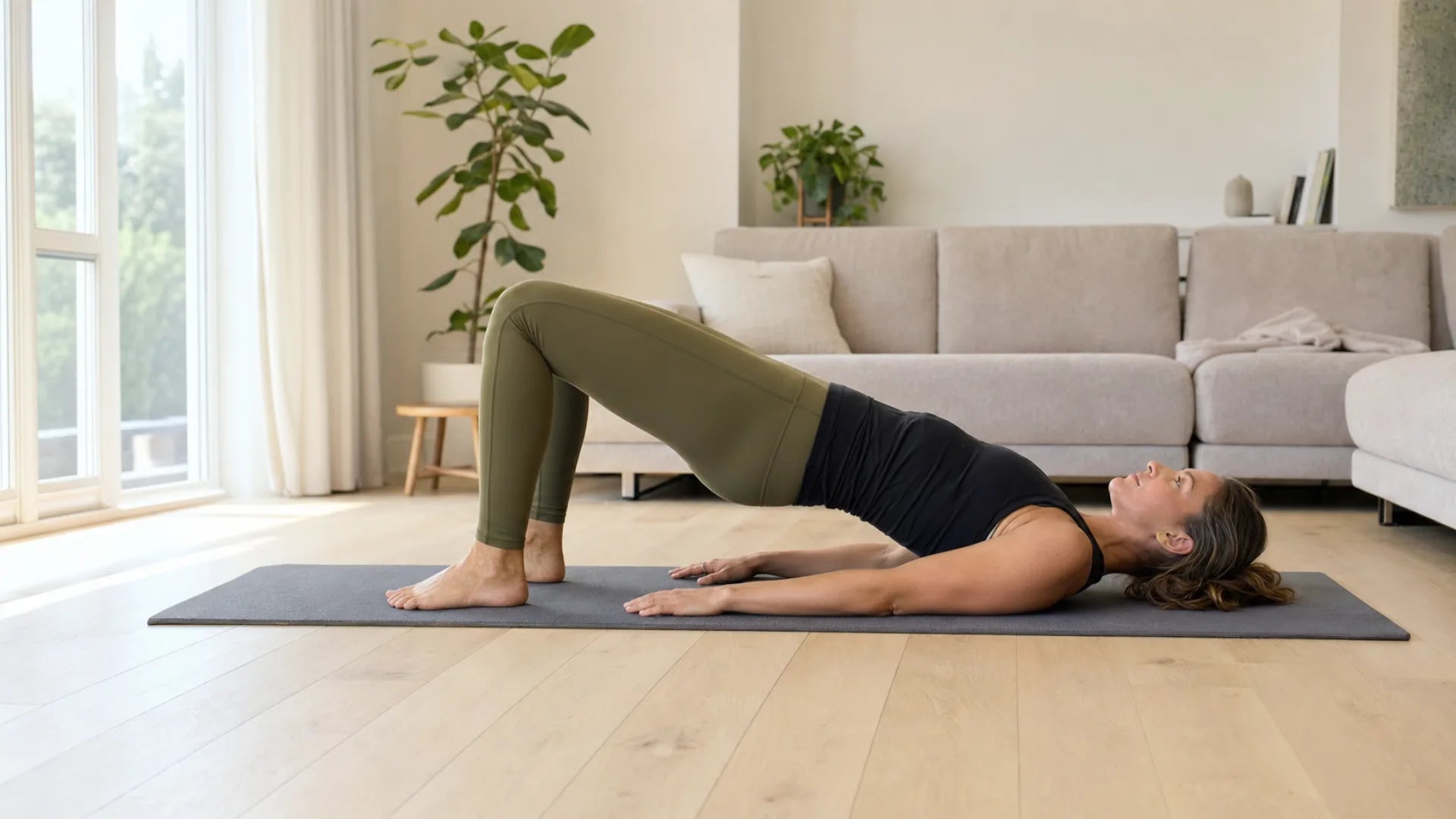
- two-leg glute bridge with a pause
- glute bridge with the feet slightly farther away
- single-leg bridge hold for 10 to 20 seconds
- reverse lunge with a slow lowering phase
- low step-up with the whole foot on the step
- split squat with a slight forward torso lean
- hamstring walkout or slider curl as a posterior-chain bridge
The last step strengthens the link with the hamstrings. For more hamstring-focused choices, read the guide to effective hamstring exercises. That guide keeps hamstrings central; this page stays focused on glute training at home.
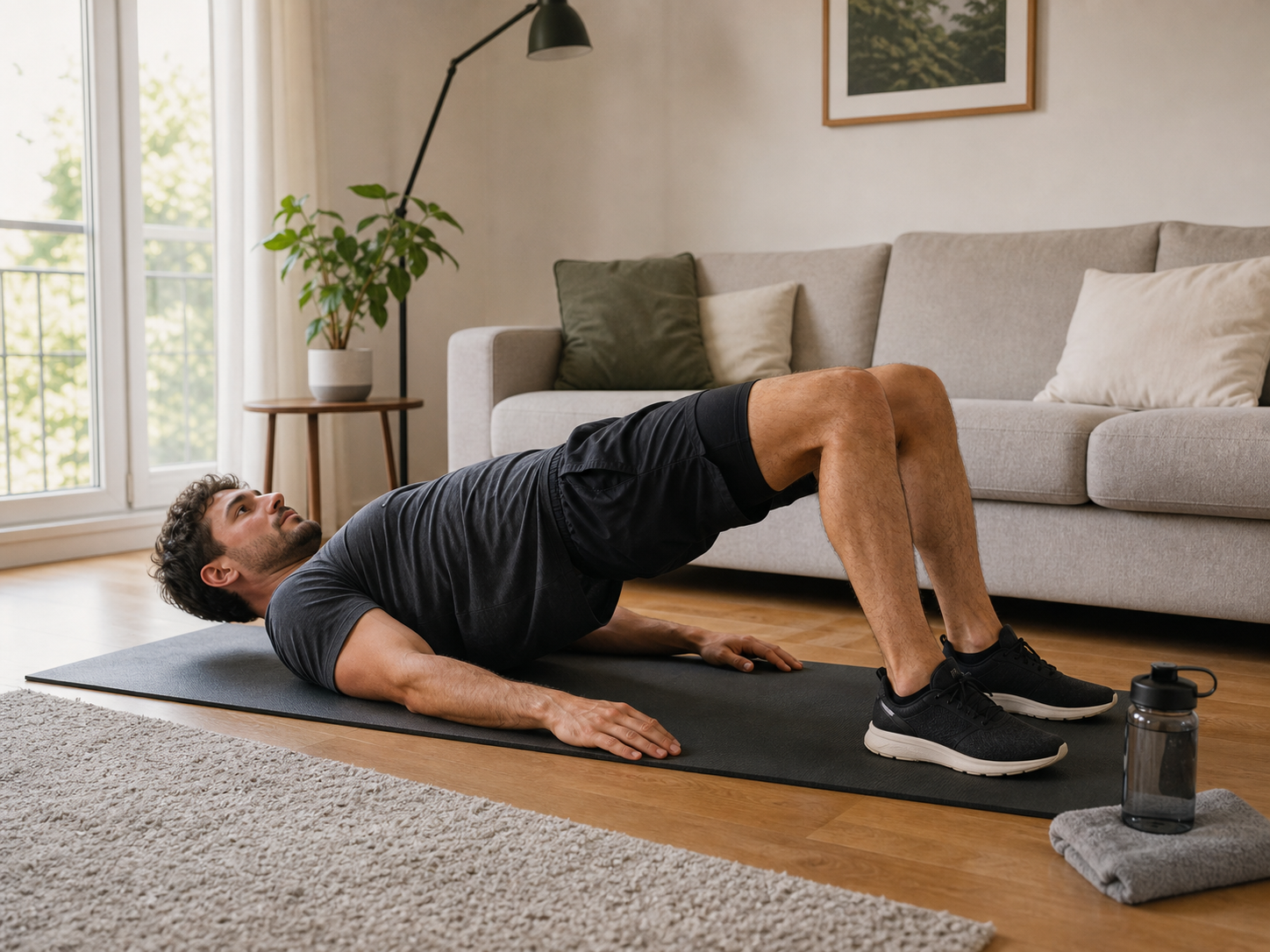
Glute bridge exercises
The glute bridge is an accessible starting point, but execution matters. Lie on your back with your feet hip-width apart, press through the heels and lift the hips. Squeeze the glutes at the top without flaring the ribs, then lower under control.
Three useful variations:
Glute bridge with a pause
Hold the top position for two seconds. This helps if you normally rush the movement and feel little tension. Reduce the range if the lower back takes over.
Glute bridge with the feet farther away
Move the feet slightly farther from the buttocks. The hamstrings will usually contribute more. Keep the movement controlled.
Single-leg bridge hold
Lift one foot and keep the pelvis level. Start with 10 seconds per side. Return to the two-leg version if the hip drops or rotates.
If you later want a stronger hip and hamstring stimulus without a GHD machine, continue with the glute-ham raise alternative for home guide.
Training hips and hamstrings at home
Glutes extend the hip, while the hamstrings assist with hip extension and knee flexion. Exercise choice changes which areas contribute most. Research shows that hip-extension exercises and Nordic-style knee-flexion exercises can emphasise different parts of the hamstrings (Bourne et al., 2017).
A practical combination is:
- glute bridge or hip-thrust variation for hip extension
- hip hinge for control from the hips
- step-up or split squat for single-leg control
- hamstring walkout or slider curl for the back of the thigh
- assisted Nordic only later, when your base load responds calmly
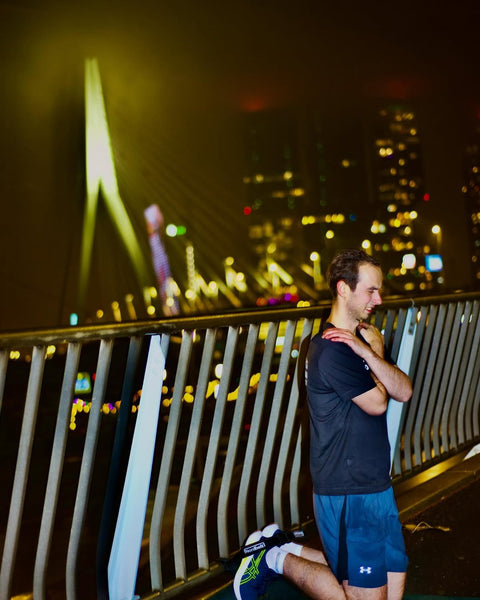
You do not need a product to begin a bridge or step-up. When you later want controlled Nordics, assisted Nordics or stable ankle fixation, first read the Nordic hamstring curl home setup, how-to guide and only then consider Nordbelt.
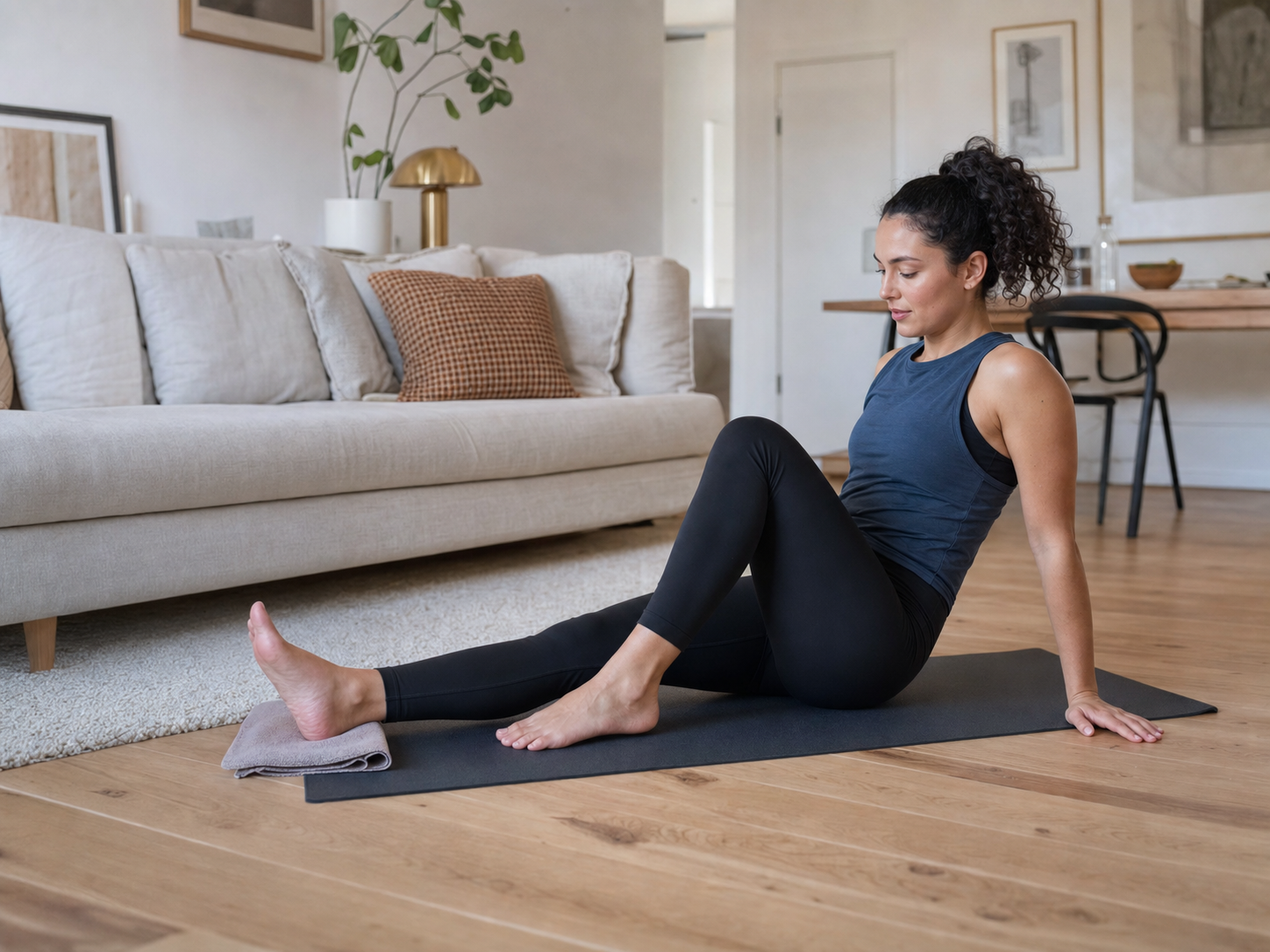
Three-week plan
Train two or three times per week and leave at least one rest day between harder sessions. The goal is not maximum soreness, but better movement and gradually greater capacity.
Week 1
- glute bridge: 3 × 10
- reverse lunge: 2 × 8 per side
- hip hinge: 2 × 10
- side-lying hip abduction: 2 × 12 per side
Week 2
- glute bridge with a pause: 3 × 10
- low step-up: 3 × 8 per side
- split squat: 2 × 8 per side
- short hamstring walkout: 2 × 5
Week 3
- single-leg bridge hold: 3 × 15 seconds per side
- slightly higher step-up: 3 × 8 per side
- split squat with a slow lowering phase: 3 × 8 per side
- slider curl or hamstring walkout: 2 × 6 under control
If technique stays sound and recovery is good, add one set or slow the tempo after three weeks. If you develop nagging pain in the knee, hip, hamstring or lower back, make the step smaller and rebuild control first.
Frequently asked questions
Which glute exercises are best at home?
Start with glute bridges, hip hinges, reverse lunges, low step-ups and split squats. Together they train hip extension, single-leg control and pelvic stability without equipment.
Can you train glutes without equipment?
Yes. Use tempo, pauses, range and single-leg variations. First make the movement slower or more stable before looking for extra resistance.
How often should you train glutes at home?
Two or three sessions per week is enough for most people. Keep sessions short, leave a rest day between harder sessions and change only one progression factor at a time.
Which glute bridge variation should I choose?
Begin with a normal glute bridge and a pause. Then move the feet farther away or try a single-leg hold. Return to the two-leg version if the pelvis drops or rotates.
How do I combine glute and hamstring training at home?
Combine a bridge with a hip hinge, step-up and later a hamstring walkout or slider curl. Assisted Nordics belong later in the progression, once basic loading is well tolerated.