

Hamstring exercises for skiing: stronger braking, turning and descending


Hamstring exercises for skiing should match descending, braking, turning, a low stance and the fatigue that builds near the end of a ski day. A few stretches before departure are too narrow for that job. A useful skiing hamstring plan combines hip strength, eccentric control, single-leg stability, calm Nordics and short conditioning blocks that are not suddenly made heavy right before your winter trip.
In brief
Skiing asks for more than strong thighs. The hamstrings help control the hips, support the knees, dose turns and absorb fatigue when a descent lasts longer than training at home. In recreational alpine skiers, eccentric hamstring and quadriceps strength dropped after a four-hour ski session and was still reduced 24 hours later (Koller et al., 2015). Use this article as a skiing-specific addition to the broader guide to hamstring exercises.
Why skiing loads the hamstrings differently
On skis you often work for a long time in a partly flexed position. You absorb bumps, brake speed, steer from hip and knee and repeatedly find balance again. The hamstrings do not only bend the knee; they also help with hip extension, trunk control and controlling forward motion of the lower leg.
Alpine ski racing has a high injury burden, with knee injuries and ACL injuries receiving a lot of attention (Tarka et al., 2019). That does not mean hamstring work can guarantee prevention. A review on recreational skiing and snowboarding found that physical fitness matters, while direct sport-specific exercise evidence remains limited (Hébert-Losier and Holmberg, 2013). Keep the goal practical: prepare the hamstrings better for the task.
Which skiing hamstring exercises come first?
Choose exercises you can repeat cleanly. If the pelvis rotates, the knee collapses inward or the lower back takes over, the step is too heavy. Start with glute bridges, hamstring walkouts, split squat holds, single-leg Romanian deadlifts, sliding leg curls, lateral lunges and assisted Nordic hamstring curls. If you also skate, the article on hamstring exercises for ice skating is a useful related guide, but skiing needs extra attention for braking, descending and changing piste conditions.
The 6 best hamstring exercises for skiing
Begin with two or three exercises per block. More is not automatically better. The best options are the ones you can do calmly and still move normally the next day.
1. Glute bridge with hamstring pressure
Lie on your back, place the heels slightly farther from the hips and lift the pelvis slowly. Pull the heels lightly toward you without moving them. Hold for two seconds and lower with control.
2. Hamstring walkout
Start in a bridge and walk the feet away in small steps. Keep the pelvis level and stop before the lower back takes over. This is a bridge between activation and real eccentric control.
3. Split squat hold in a low stance
Drop into a split squat and hold for 20 to 30 seconds. Keep the trunk quiet and the knee aligned with the foot. This fits skiers because it teaches force in a low position without standing fully up each time.

4. Single-leg Romanian deadlift
Hinge from the hip, keep the back long and let the free leg move back calmly. The value is control: stable foot, soft knee and hips as level as possible.
5. Sliding leg curl
Use sliders, socks on a smooth floor or a towel. Pull the heels in and slide back slowly. For more choices, use the guide to eccentric hamstring exercises.
6. Lateral lunge or skater squat
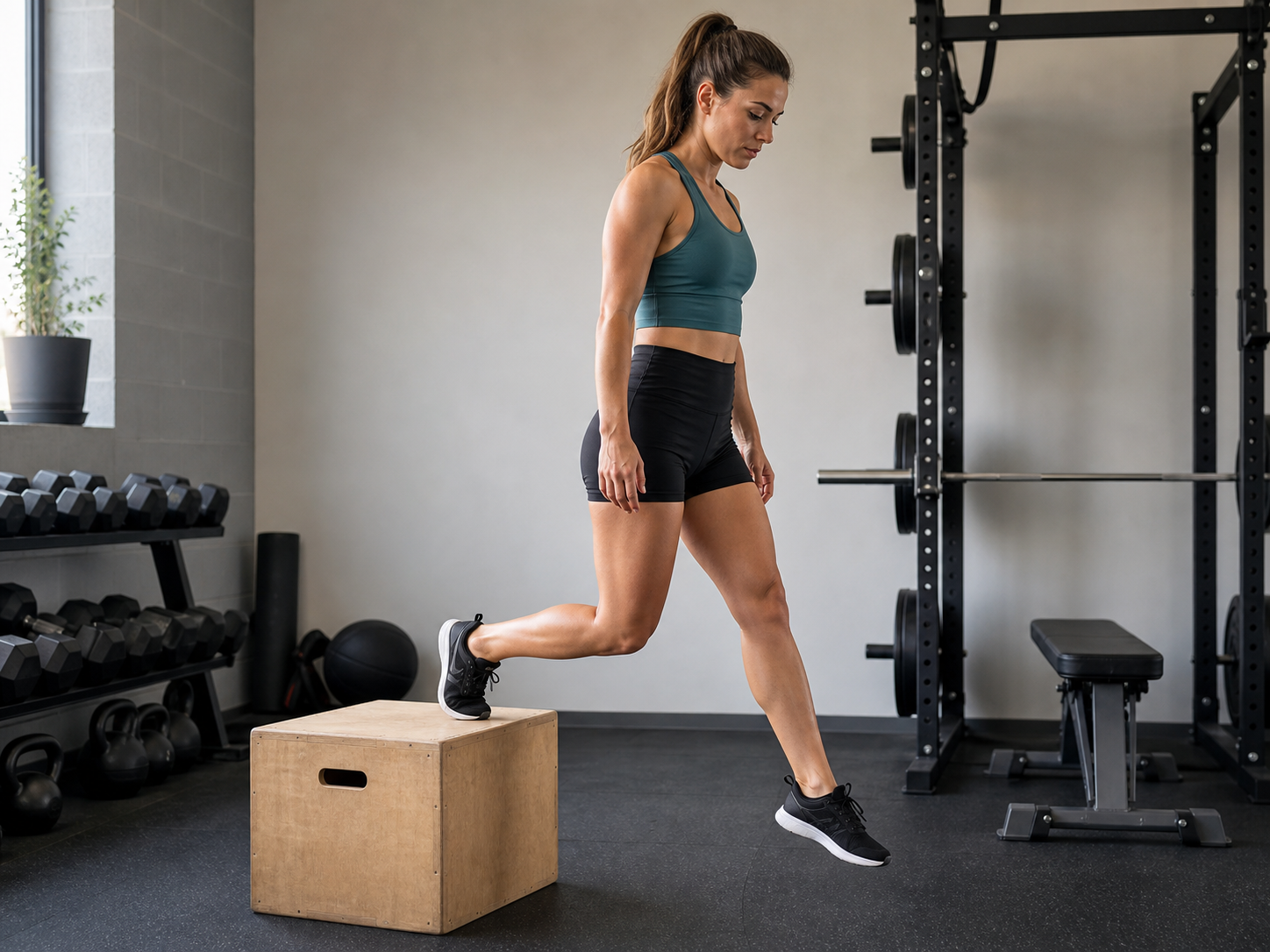
Step sideways, send the hip back and return with control. This trains the lateral control many skiers miss in ordinary gym work.
Nordic hamstring for skiing: when and how heavy?
The Nordic hamstring curl can be useful for skiers, but not as the first exercise for a beginner. Eccentric hamstring training can reduce hamstring injuries in sport and improve risk factors such as strength and fascicle length (Rudisill et al., 2023). The value depends on dosage.
Start assisted: once per week, 2 sets of 3 to 5 calm repetitions, hands ready to catch, a short range if needed and at least 48 hours before the hardest lower-body session or ski day. Read the Nordic hamstring curl guide first if the technique is not stable yet.
Hamstring training for skiing in a weekly plan
If you leave in six weeks, two short repeatable sessions per week beat one aggressive weekend block. Weeks 1-2: bridges, walkouts, split squat holds and light hinges. Weeks 3-4: sliders, single-leg deadlifts and lateral lunges. Weeks 5-6: assisted Nordics and short braking or turning drills. Travel week: maintain, do not wreck your legs.
Reducing ski hamstring injury risk without false certainty
No exercise list can fully prevent a ski hamstring injury. Snow conditions, fatigue, technique, equipment, speed and previous complaints all matter. Progressive Nordic programs reduced acute hamstring injuries in football studies, but that evidence should not be read as a hard promise for skiing (Petersen et al., 2011; van der Horst et al., 2015). Use the Nordic as a strong hamstring stimulus, not as a guarantee.
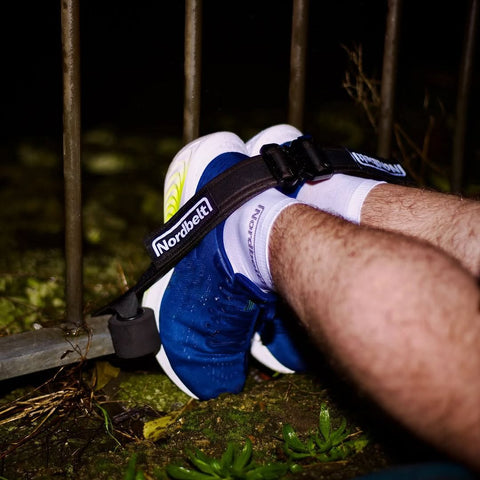
Nordbelt mainly fits the part away from the piste: assisted Nordics, controlled Nordics and solo training where the ankles need to stay low and predictable. View Nordbelt if you want a compact setup, and use the how-to guide to test the fixation step by step.
FAQ
Which hamstring exercises for skiing matter most?
Start with bridges, walkouts, single-leg Romanian deadlifts, sliding leg curls and lateral lunges. Add assisted Nordics only when the base reacts well.
Does the Nordic hamstring curl fit skiing?
Yes, as a dosed strength stimulus outside the busiest ski days. Start assisted, keep volume low and avoid placing it right before your hardest session.
How often should skiers train hamstrings?
For most recreational skiers, two short sessions per week during preparation are enough. In the travel week, maintenance is smarter than heavy progression.
Can these exercises prevent a ski hamstring injury?
Not completely. They can help you manage load, strength and control, but pain or a recent injury deserves personal assessment.