

Hamstring exercises for dance: strength, control and flexibility


Hamstring exercises for dance should combine strength and flexibility without forcing range. Ballet, modern, contemporary, jazz and hip hop require more than deep stretching: the hamstrings must control kicks, jumps, landings, floorwork and quick direction changes. A useful dance hamstring plan starts with control, hip strength and calm eccentric work before heavier Nordics, sliders and explosive patterns.
Quick answer
Dance asks a lot from the hamstrings because mobility, repetition and control are needed at the same time. Modern and contemporary dancers show a high rate of musculoskeletal problems, often in the lower limb and often related to repeated load (Sun and Liu, 2024). Stretching alone is too narrow. Keep dance-specific range, add calm strength and place heavy eccentric work on days your classes allow recovery.
Use this page as a dance-specific addition to the broader guide to hamstring exercises. The principle is simple: control the pelvis, build strength slowly and let the next-day response decide whether volume can increase.

Why dance loads the hamstrings differently
Dance often loads the hamstrings near the end of range. Think of developpes, high kicks, hinges, jumps, floorwork, deep lunges and landings where trunk, hip and knee must work together. That is different from a simple gym curl: you need strength while keeping line, rhythm and posture.
For dancers this mix matters. A study in young dance students used eccentric hamstring training, including Nordic hamstring exercises and single-leg deadlifts, to improve hamstring strength and flexibility (Liang et al., 2024). That does not mean every dancer should start with hard Nordics. It does show why dance hamstring training should be more than static stretching.
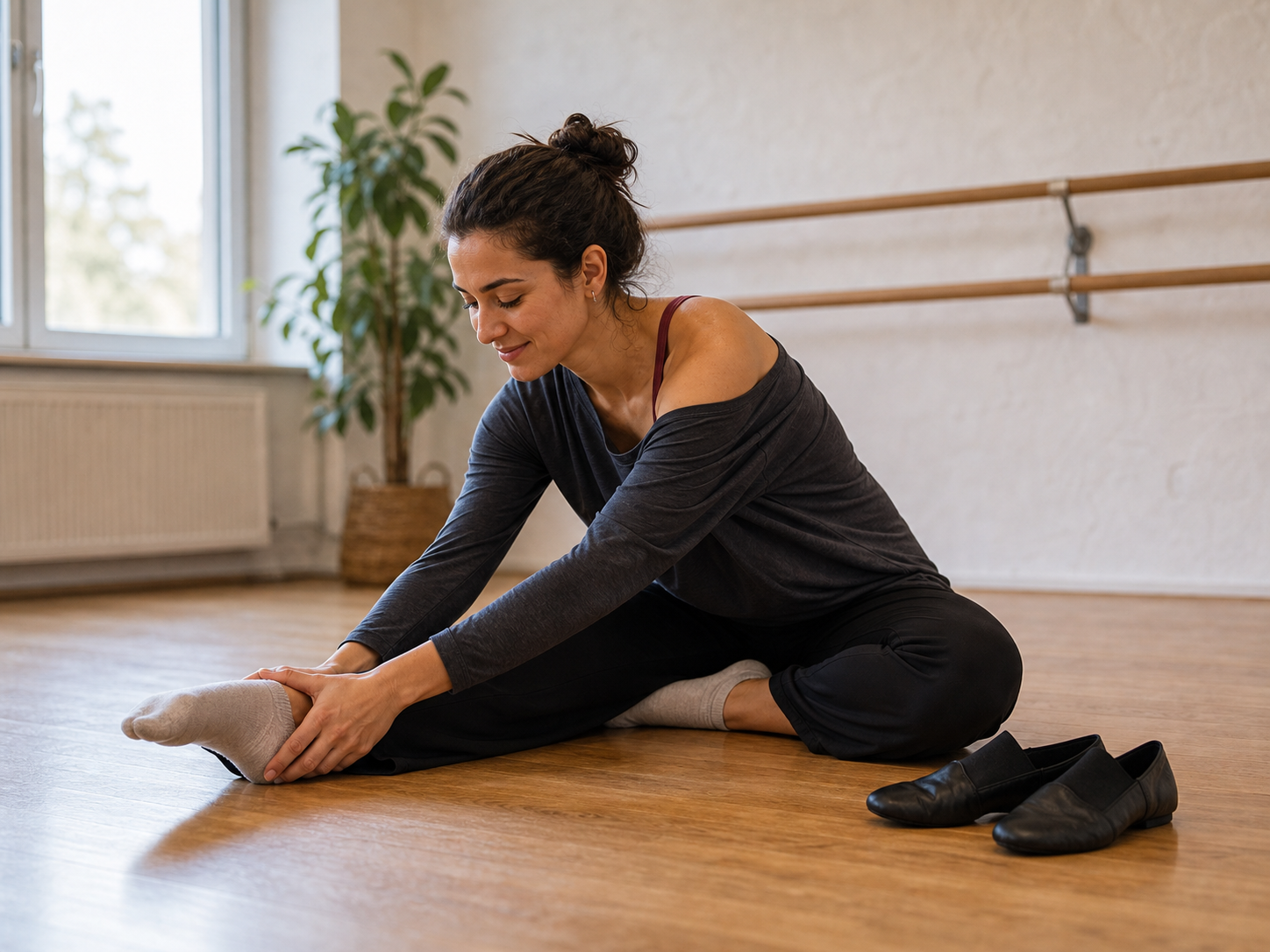
- hip control so the leg can move high without the lower back taking over
- eccentric strength so kicks, landings and floorwork transitions can be braked calmly
- single-leg stability so the standing leg stays organized during turns, jumps and landings
Which dance hamstring training comes first?
Choose exercises that stay technically quiet. If the hamstring pulls immediately, the pelvis tilts or the lower back takes over, the step is too heavy. Dancers are used to working through fatigue, but strength work is most useful when the repetition stays clean.
- glute bridge with a long exhale
- hamstring walkout
- single-leg Romanian deadlift
- slider leg curl
- split squat with trunk control
- assisted Nordic hamstring curl
- low jump and landing drills
- dance-specific combination with a kick, hinge or floorwork transition
Start with two to four exercises per block. If you already have several classes, rehearsals or shows each week, a small repeatable strength stimulus is usually better than one heavy leg day.
Take your Nordic curl from the first rep to week 10.
A concrete 7-page plan: build up week by week, without pushing too fast.
- 01A clear week-by-week progression
- 02Technique and the mistakes to avoid
- 03A simple log you will actually use

≤ 51%
✓Backed by research
Van Dyk et al., 2019: meta-analysis of programmes with NHE. Not an effect test of Nordbelt or this protocol.
Open the download page again or check the email we sent you.
Open the download page ↗The 6 best hamstring exercises for dance
These dance hamstring exercises move from control to heavier work. Keep them pain-free or only mildly fatiguing. Sharp pain, radiating symptoms or a clear injury moment should be assessed by a professional.
1. Glute bridge with hamstring pressure
Lie on your back, place the heels slightly farther away from the hips and lift the hips. Gently pull the heels toward you without sliding. This teaches the hamstrings to work with the glutes and trunk without creating unnecessary soreness.
2. Hamstring walkout
Start in a bridge and walk the feet forward in small steps. Walk back in control. Stop when the hips drop or the lower back takes over.
3. Single-leg Romanian deadlift
Hinge from the hip, keep the pelvis square and let the free leg move only as far as trunk control allows. Start without weight, then add a light dumbbell if the movement stays clean.
4. Slider leg curl
Use sliders or a smooth floor. Slide the feet away slowly and return under control. This is a useful bridge toward eccentric hamstring exercises without jumping straight to full Nordics.
5. Assisted Nordic hamstring curl
The Nordic hamstring curl is demanding but useful when built gradually. Programmes including the Nordic hamstring exercise are often linked with fewer hamstring injuries in sport, while dosage and execution still matter (van Dyk et al., 2019). Read the Nordic hamstring curl guide before going heavier.
The research findings apply to the programmes and participants studied. The exercise plan on this page has not itself been tested as an injury-prevention programme for this sport. Treat the suggested schedule as a practical example and adapt it to your training and recovery.
6. Landing control with a soft rebound
Pick a small jump from your own dance style, land quietly and hold the position. The goal is not maximum height but a quiet trunk, knee alignment and controlled hip position.
Nordic hamstring curl for dance: when it fits
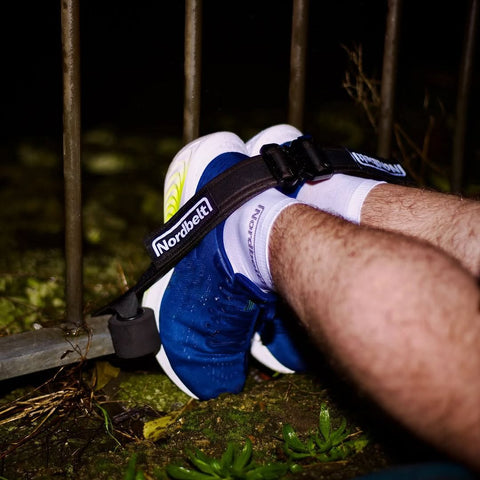
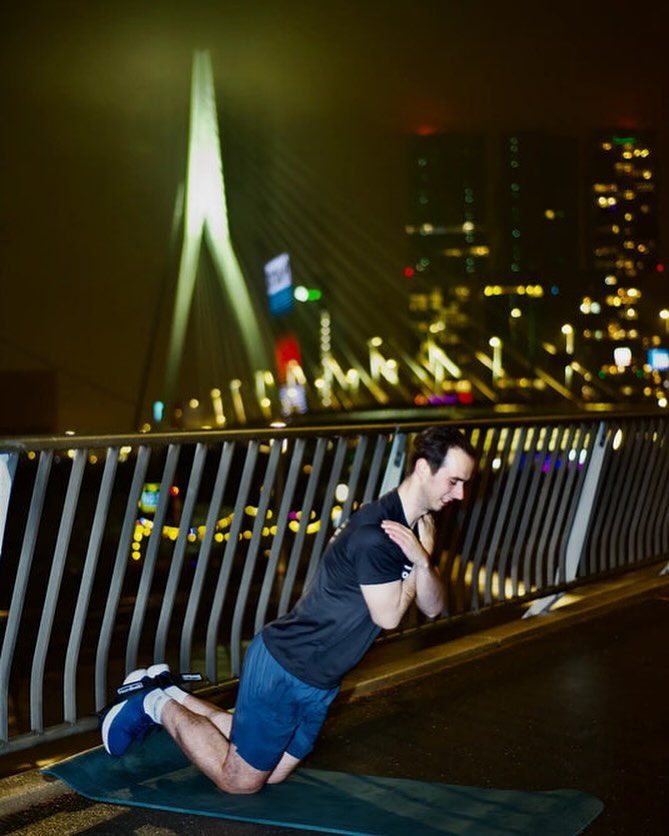
The Nordic hamstring curl can fit dance, but usually as an assisted variation first. Hold the high position, lower for three seconds with hands ready, then gradually lengthen the range. For home or studio work, stable low ankle fixation is important. With Nordbelt you can fix the ankles low for controlled solo Nordics. Always test the anchor with your hands first and use the how-to guide as a setup check.
Planning hamstring training around dance
Plan strength around classes. Heavy eccentric work can create soreness and disturb technique the next day. A simple week is: class plus light activation, one strength block with bridge/RDL/slider, a technique day, one short assisted-Nordic block, rehearsal, light mobility and a rest day. If you also sprint or jump, compare the load with hamstring exercises for track and field, but keep dance hours and choreography fatigue leading.
Reducing hamstring injury risk without false certainty
No exercise list can guarantee that a hamstring injury will be prevented. Dance also depends on technique, fatigue, floor, shoes, range, rehearsal volume and recovery. What you can control is gradual loading, strength in dance-like positions and not forcing maximum flexibility every session. Reduce the load if one sharp spot keeps returning, landings get noisy, soreness lasts more than 48 hours or the lower back starts compensating.
FAQ
Which hamstring exercises for dance matter most?
Glute bridges, walkouts, single-leg Romanian deadlifts, slider curls, assisted Nordics and calm landing control. Together they train hip strength, eccentric control and stability before maximal range or maximal effort.
Does the Nordic hamstring curl fit dance?
Yes, but usually as an assisted variation and not as the first step. Start short, catch yourself with the hands and increase range only when the 24 to 48 hour response is calm.
How often should dancers train hamstrings?
For most dancers, two short strength blocks per week are enough. Three can work in a lighter period, but not when rehearsals, shows or heavy technical classes are already high.
Can hamstring injury in dance be prevented?
Risk can be managed, not removed. Build strength, monitor fatigue, recover properly and ask a physiotherapist or doctor for help when pain is sharp, recurring or changes how you move.