

Zone 2 training: why your watch and plan can disagree

Zone 2 training only becomes meaningful when you know which zone model is being used. A watch with five zones can assign the same number differently from a plan with three. Check the number of zones, the calculation basis and the origin of the reference values before comparing advice. The tables below help you do that. Speech and perceived effort add context, but do not calculate a personal heart-rate boundary.
What does zone 2 mean in different models?
A zone number is a label within a classification. In the three-zone model described by a review of ten studies in highly trained and elite distance runners, zone 1 extends to the first ventilatory or lactate threshold, zone 2 lies between two thresholds and zone 3 lies above them. This describes research in experienced runners; it is not a beginner's weekly programme (Casado et al., 2022).
Popular explanations also use zone 2 to mean low-intensity training below a lactate threshold. A review of that usage shows why the definition matters: the same term does not automatically mean the same effort (Storoschuk et al., 2025). For a watch with five zones, inspect its chosen classification and boundaries. There is no automatic conversion that makes every zone 2 identical.
A threshold is a transition point derived from an exercise test, for example using respiratory gas analysis or blood lactate. The test and its interpretation also matter. A general percentage on a screen is not, by itself, a measured threshold (Bok et al., 2022).
Why do heart-rate percentages differ?
A percentage needs a reference. The comparison below explains the terms; it is neither a calculator nor a personal prescription. Do not copy a percentage from one system into a field that asks for something different.
| Basis used by the plan or watch | What does it mean? | What should you check? |
|---|---|---|
| Maximum heart rate, often HRmax | The percentage refers to maximum heart rate. | Was the entered maximum estimated or measured? |
| Heart-rate reserve | The difference between maximum and resting heart rate; resting heart rate is included when converting this to a target heart rate. | Does the system actually use reserve, and which resting and maximum values are entered? |
| Threshold heart rate | The classification refers to a named threshold value. | Which threshold, test, sport and date does that value relate to? |
The word 'zone' cannot replace these definitions. Objective intensity methods rely on reference values, while subjective methods such as perceived exertion provide different information. Knowing how a reference was obtained is useful without assuming that every test measures precisely the same thing (Bok et al., 2022).

What does the talk test tell you when running?
A talk test assesses whether speaking remains comfortable during exercise. A review including healthy adults and people with cardiovascular disease describes a relationship with ventilatory or lactate thresholds. This makes speech useful as an additional observation, but not an exact measurement of your heart-rate or lactate boundary (Reed & Pipe, 2014).
You might record 'comfortable speech', 'uncertain' or 'speaking takes effort', alongside how demanding the exercise feels. That adds context to a watch reading. It does not prove that a particular zone setting is correct. A later review of subjective methods emphasises the need to consider reliability and interpretation for each method (Bok et al., 2022).

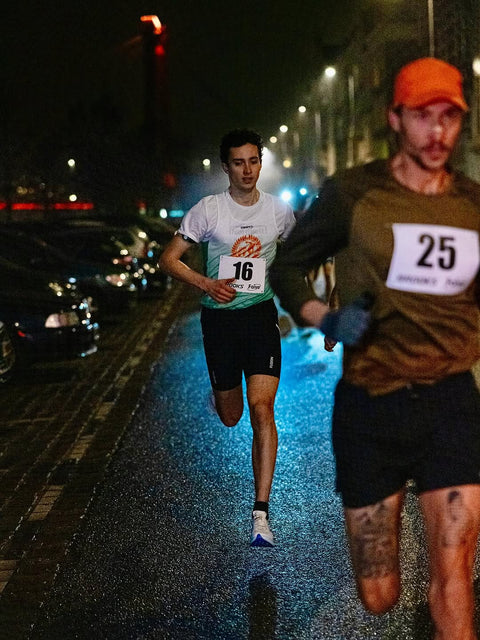
Illustrative running scene. The photograph shows neither a measured training zone nor a completed talk test.
Take your Nordic curl from the first rep to week 10.
A concrete 7-page plan: build up week by week, without pushing too fast.
- 01A clear week-by-week progression
- 02Technique and the mistakes to avoid
- 03A simple log you will actually use

≤51%
✓Backed by research
Van Dyk et al., 2019: meta-analysis of programmes with NHE. Not an effect test of Nordbelt or this protocol.
Open the download page again or check the email we sent you.
Open the download page ↗Compare your plan and watch side by side
Complete the same fields for both sources. This is an editorial comparison sheet for finding missing information, not a validated exercise test. Leave an unknown field blank and ask the plan's author for clarification before changing settings.
| Information to compare | My plan | My watch |
|---|---|---|
| Sport and purpose of the session | … | … |
| Number of zones and definition of zone 2 | … | … |
| Basis: maximum, reserve or named threshold | … | … |
| Origin and date of the reference values | … | … |
If the models differ, first clarify the intended effort. If only the entered value differs, find out where each value came from. Do not adjust boundaries simply to obtain a preferred colour in your training history. For the duration and distance of an individual session, read about planning a marathon long run.
Does any separate hamstring work fit your plan?
Comparing zone models requires no strength-training equipment. Only if you separately choose Nordic curls at home might Nordbelt's fixed ankle support make that other setup practical without a training partner or large machine. A suitable, checked anchor remains necessary. The aid does not determine heart-rate zones and has no role here in endurance training or fat oxidation. The hamstring exercises for runners guide covers that separate exercise choice.
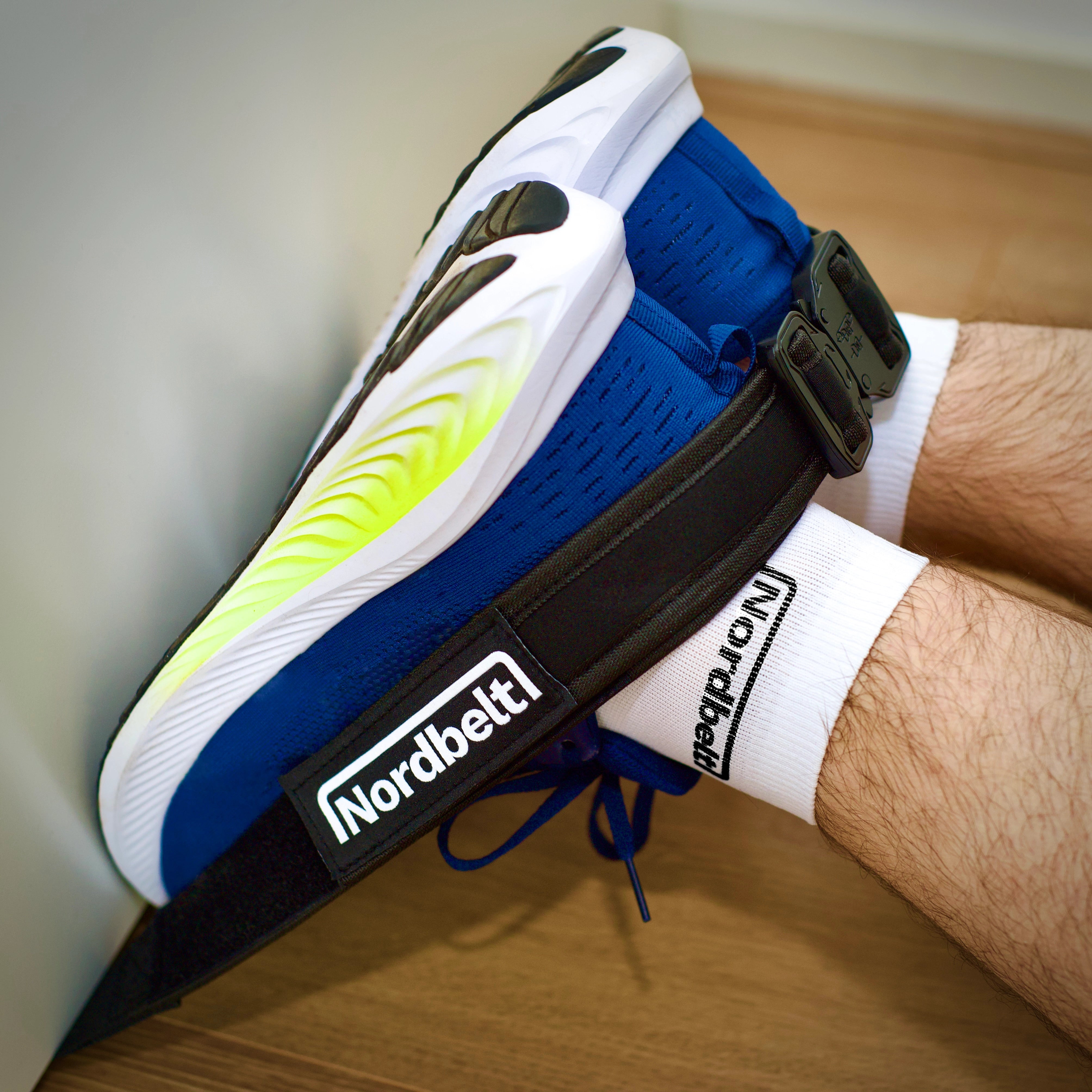
Equipment for a separate Nordic setup. This is not a running accessory or a complete exercise demonstration.
A fictional example of mismatched zone labels
Noor reads 'zone 2' in a plan using three zones. Her watch displays five. She does not immediately conclude that her workout was too hard or too easy. First, she writes down each source's definition. In her fictional plan, the label means 'between two thresholds'; her watch turns out to use percentages of an estimated maximum heart rate. The two labels do not yet describe a comparable task.
Noor asks what effort the plan's author intended and which reference supports it. She also keeps her own note about speech and perceived effort. This example demonstrates information comparison, not the right zone for Noor. It invents no test result, customer outcome or optimal training plan. Race pace requires a separate decision too: see planning your marathon pacing for that question.
Frequently asked questions
What heart rate should zone 2 training use?
There is no number that applies to everyone without a model and individual reference values. First check how many zones your source uses and whether boundaries refer to maximum heart rate, heart-rate reserve or a particular threshold. This page helps compare those definitions; it does not calculate personal upper or lower limits. Have test results explained within the sport and method for which they were obtained.
Is zone 2 in a three-zone model the same as on my watch?
Do not assume so. The research discussed in highly trained and elite runners uses zone 2 between thresholds. A watch may use a different classification. Read the descriptions and boundaries instead of copying the number alone. A fixed equation with zone 1 in another model is also insufficiently precise (Casado et al., 2022).
Does comfortable speech prove I am in the right zone?
No. Comfortable speech can help assess effort, but does not automatically confirm your watch's model or entered values. The talk test examines a relationship with physiological thresholds; it does not supply an exact individual heart-rate boundary. Describe what you notice and use it alongside, rather than instead of, your training's definition (Reed & Pipe, 2014).
Is zone 2 always best for fat burning?
That does not follow from the sources discussed. A narrative review concludes that available evidence does not identify zone 2 as uniquely optimal for mitochondrial capacity or the ability to oxidise fatty acids in the general public. This is not an instruction to train only at high intensity either. A physiological adaptation, weight loss and an appropriate personal training plan are different questions (Storoschuk et al., 2025).
What if my watch shows an unexpectedly high zone?
First check the sport profile, zone model, calculation basis and origin of the reference values. Also record what the session involved and how the effort felt. Do not change boundaries just to remove the warning. If you have symptoms or medical questions, checking settings is not an assessment of what is safe for you; discuss that with an appropriate healthcare professional.