

Pilates or strength training: compare goals and exercises


When choosing Pilates or strength training, start with the strength you want to develop and the exercises you actually do. A Pilates class can involve resistance, but its name does not tell you which movements, loads and progression it includes. Look at your goal, the exercise task and what you can track. The comparison below helps you clarify what your class already contains and which question you still want to ask the instructor or trainer.
Is Pilates strength training?
Pilates includes mat exercises and exercises using equipment. In mat exercises, your body weight and chosen position can contribute to resistance; equipment may use springs, among other features. The specific task varies between exercises. Pinto and colleagues describe these different forms in their review, but do not analyse mat and equipment-based Pilates separately (Pinto et al., 2022).
Describe one exercise before calling the whole class strength training. Which movement do you perform? What resistance do you encounter? How is the next attempt compared with the previous one? A sideways stretch on a mat and a pressing movement with weights involve different tasks. A recognisable position or a class name does not establish equal results.
For a specific strength goal, it helps to know how the exercise task can be adjusted. The ACSM position stand on resistance training in healthy adults relates progression to the goal, physical capacity and training experience. That general principle does not evaluate your Pilates class and provides no personal number of sets or repetitions here (American College of Sports Medicine, 2009).

Context image of a side plank supported on a forearm and bent knees. The photo shows neither a strength measurement nor a prescribed exercise.
What does research say about Pilates and getting stronger?
Pinto and colleagues included sixteen studies in their review; eleven entered the meta-analysis. Participants had no movement limitation that prevented exercise. Ages, exercises and comparisons varied. The studied strength outcomes showed no convincing difference between Pilates and other exercise types, with low to very low certainty of evidence. This does not prove that all classes and strength programmes are equivalent (Pinto et al., 2022).
The comparison concerned different measures of strength, rather than a guaranteed amount of muscle growth. It also does not tell you which particular class fits your own goal. Use the research to put limits on broad promises, then assess what actually happens in your class.
Compare the exercise task with your own goal
Take an existing class or training session and complete this overview. It is a way of organising questions, not a validated test or numerical score.
| What do you want to know? | What do you record? | Which question remains open? |
|---|---|---|
| What strength do I want to develop? | The specific movement or task that matters to you | Is that task practised in this class? |
| What resistance is involved? | Body position, support, weight or equipment setting | Which elements stay the same on the next attempt? |
| How does progression work? | The adjustment the instructor or trainer intends for this task | Does resistance, range of motion, support or something else change? |
| What do I notice about my performance? | What you actually did and under which conditions | Can I later compare this with the same task? |
How can you combine Pilates and strength training?
First compare the tasks the two sessions actually contain and decide which you want to keep. Then discuss what you add, replace or schedule differently. Two class names in your calendar do not yet describe their content.
For spreading the same intended strength work across days, see the separate comparison of full-body training and a split routine. Short bouts of movement throughout the day raise a different question; read about exercise snacks and strength training.
Stop the exercise if you experience pain or lose control. Persistent or recurring symptoms need assessment by an appropriate healthcare professional. This overview offers neither treatment advice nor an individual training programme.
Do you also want to do Nordic curls at home?
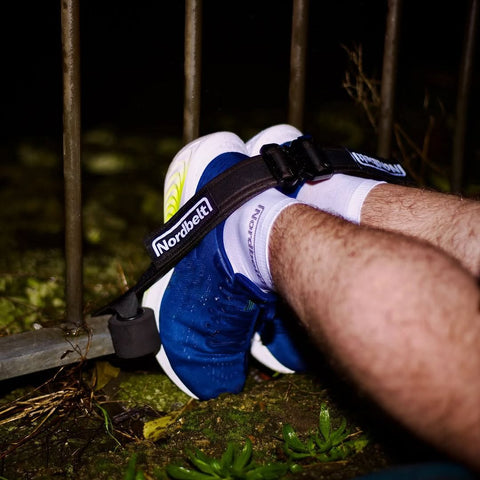
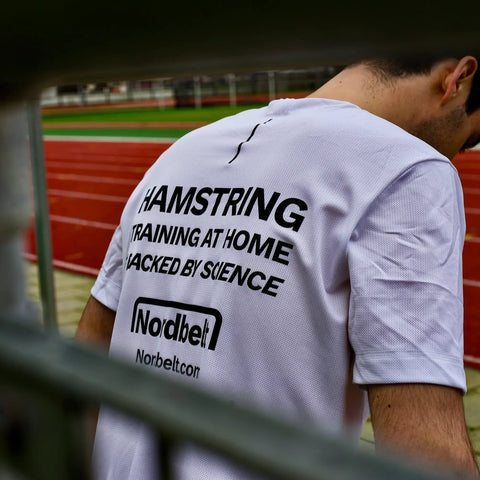
If you separately choose to do Nordic hamstring curls at home, that exercise requires both ankles to be secured reliably. Nordbelt enables that home setup without a training partner or a large machine. You still need a suitable, checked anchor point, knee support and space to catch the forward movement. See Nordbelt for Nordic curls at home if that separate setup is your question. The equipment does not determine whether your Pilates class fits your strength goal.
Make your next comparison concrete
A fictional example: someone wants to improve a pressing movement. After a mat class, they write only “lots of stretching, tired”. After a dumbbell session, they have recorded the movement and the weight used. The second note contains more information about that pressing task; the first leaves the question open. This invented example proves neither that the mat class lacked strength exercises nor that the dumbbell session produces better results.
Ask the instructor which exercise and progression fit your strength question. An empty box is a reason to ask for an explanation, without using a heavier or maximal attempt as a check.

Context image of a standing position with two dumbbells overhead. The photo prescribes no weight, movement or training dose.
Keep the class name as background and record the exercise task itself. Also note what changed, such as different support or an equipment setting. An attempt that feels harder but involves a different task cannot be compared directly with your previous note.
Write “unknown” if you do not know a setting or resistance. Ask how it can be recorded before concluding that you have progressed. Record an observation separately from an intended goal: what you wanted to do is not automatically what you did.
“Tired after class” can also appear in your notes as an experience. For a specific strength question, you still need to know which task you performed. To understand set notation using estimated repetitions in reserve, see the separate explanation of RIR in strength training. An estimate like this does not replace a description of the exercise.
Frequently asked questions
Does every Pilates class count as strength training?
The name alone does not answer that. Look at the exercises, resistance and progression in the class and the strength you want to develop. A class can combine different tasks. Ask the instructor about a specific exercise for your goal; the comparison table helps reveal missing information.
Can you build muscle with Pilates?
The review discussed here compares strength outcomes and does not establish a guaranteed amount of muscle growth from your Pilates class. Greater strength and greater muscle mass are different outcomes. Do not use a strength comparison as evidence for a muscle-growth promise (Pinto et al., 2022).
Is equipment-based Pilates better for strength than mat Pilates?
This review does not establish that ranking: mat and equipment-based Pilates were not analysed separately. Look at the specific exercise, resistance and ways to progress the task. An equipment name does not tell you which result to expect (Pinto et al., 2022).
Do I need extra strength training alongside Pilates?
That depends on your own goal and the content of your class. First make clear which tasks you already do and what you want to add or change. Discuss a personal adjustment with someone who knows your training and capabilities. The fictional comparison in this article prescribes no extra session or amount of work.