Hamstring pain when cycling: load, saddle or assessment?

Hamstring pain when cycling calls for attention to how it started, how it changes and what your leg can still do. A painful spot cannot tell you whether your saddle is too high or which tissue is involved. Stop if severe pain starts suddenly. Consult a doctor for clear weakness, extensive bruising or difficulty walking normally; those symptoms call for more than experimenting with your bike settings (Hickey et al., 2022).
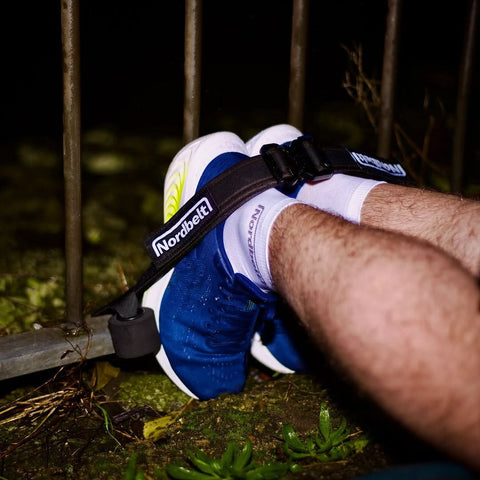
If Nordic curls suit a later stage of your progression, the Nordbelt homepage explains how to anchor both ankles for that separate strength exercise. This setup cannot diagnose a problem, correct your riding position or treat cycling pain. The immediate question is which assessment and level of activity are appropriate.
When and where does the pain start?
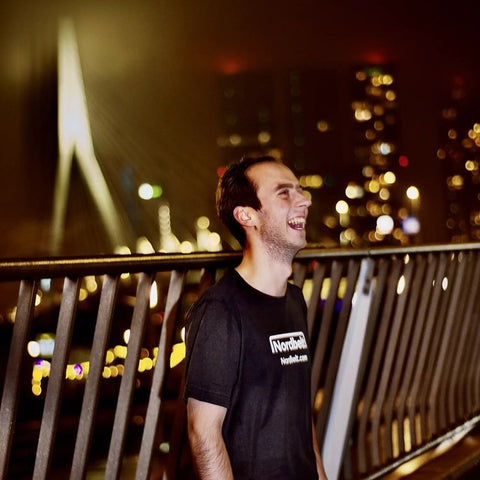
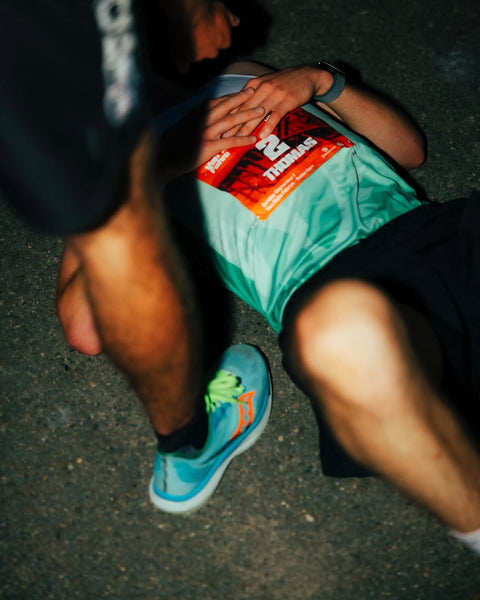
Describe it precisely: did it start suddenly during an acceleration, gradually on a long ride or only after you got off? Record whether it is in the middle of the back of your thigh, high under the buttock or nearer the knee. Include what happens when walking and sitting. Do not turn that combination into a tissue diagnosis yourself. The opening photograph shows a cycling break, not a symptom test or prescribed stretch.
Pain high near the sitting bone can occur with proximal hamstring tendon problems. Their clinical presentation extends beyond pain on a bicycle and requires assessment of symptoms and function. A single sensation or position cannot establish the diagnosis (Goom et al., 2016). If sitting in a chair is the main problem, see pain at the back of the thigh when sitting.

Compare riding load with changes to your bike
Make two short lists before drawing conclusions. First, changes to your riding: longer outings, more climbing, different intervals or extra strength work. Second, changes to equipment or position: another bike, a new saddle, different shoes or an altered setting. Record when each change happened.
| What you noticed | What you can discuss | What it does not yet prove |
|---|---|---|
| Symptoms began after a longer or harder cycling week | How your total workload changed | That training volume alone caused the problem |
| Symptoms followed a different bike or setting | What changed and how you now move | That one particular measurement needs adjusting |
| Symptoms also occur when sitting or walking | Effects away from the bike and the need for assessment | That a bike fit answers the medical question |
This table is a discussion aid, not a validated test. A shorter ride feeling better does not establish a cause. Nor does a change in symptoms after moving the saddle. Keep your observations separate from their explanation.

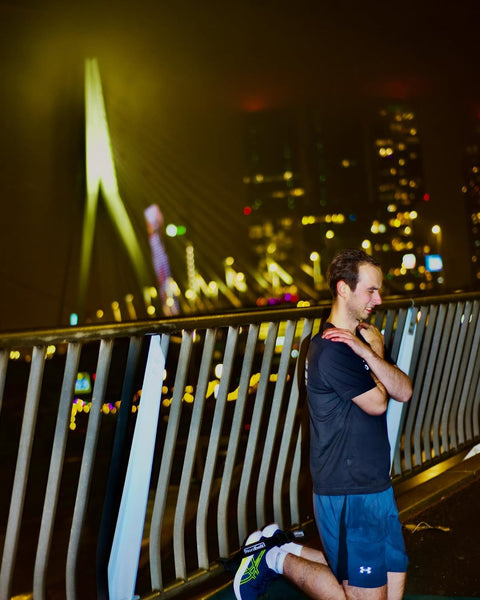
A rest beside an indoor bike: this context photograph shows neither a bike fit nor a therapeutic exercise.
Should you raise or lower the saddle?
Hamstring pain alone provides no reliable direction or amount for a saddle adjustment. A systematic review of cycling overuse problems found limited high-quality research and conflicting evidence about the relationship between saddle height and symptoms. It covered different cycling complaints, not a separately established hamstring mechanism (Visentini et al., 2022).
That does not make an individual assessment of riding position pointless. In a randomised trial involving 162 amateur cyclists, a three-dimensional bike fit improved perceived pain, fatigue and comfort more than written posture advice at fifteen days. This does not establish a treatment for your hamstring pain or a universal saddle measurement (Dias Scoz et al., 2025).
Take your specific changes and symptom notes to an appropriate professional. Ask which adjustment is being considered and how the response will be followed. Mention symptoms that also occur away from cycling. Avoid changing saddle height, saddle position and cleats together and then drawing a medical conclusion from one ride.
Take your Nordic curl from the first rep to week 10.
A concrete 7-page plan: build up week by week, without pushing too fast.
- 01A clear week-by-week progression
- 02Technique and the mistakes to avoid
- 03A simple log you will actually use

≤ 51%
✓Backed by research
Van Dyk et al., 2019: meta-analysis of programmes with NHE. Not an effect test of Nordbelt or this protocol.
Open the download page again or check the email we sent you.
Open the download page ↗When should you seek an assessment?
Contact a doctor for sudden severe pain, clear loss of function or symptoms after an accident. Arrange an assessment if symptoms recur, worsen or interfere with normal walking, sitting or sleep. A bike-fitting professional can assess position; an unclear source of pain or loss of function also needs a healthcare professional.
Seek urgent medical help for new bladder or bowel problems, numbness around the groin or rapidly increasing weakness. These changes need medical assessment even if you first notice them after a ride. Do not wait for several warning signs to appear together (Long et al., 2020).
Do not ride through pain to make a comparison or repeatedly provoke it with maximal stretches or strength tests. The broader guide to persistent pain at the back of the thigh can help you describe the problem.
What should you record before an appointment?
A useful note describes an event. For example: “After changing bikes, I felt pain high at the back of my right thigh halfway through an easy ride. Sitting was uncomfortable later.” That is more informative than “my saddle is wrong”, because it leaves the explanation open.
Add your bike and recent settings, the type of ride, when symptoms started and how they changed later that day. Describe any difference in walking or sitting the next morning. You do not need another painful ride to collect this information. Use what you have already observed.
Note-taking as context: the photograph shows no medical assessment or prescribed exercise.
Discuss appropriate activities if you are unsure about continuing. This article cannot provide a pain threshold, heart rate or distance that makes cycling safe for everyone. Do not choose a harder hamstring exercise to check whether something is “really wrong”.
When does separate strength training become relevant?
Decide what to do about the symptoms before choosing another training block. Once appropriate loading is clear, discuss whether separate hamstring training is needed. The existing guide to hamstring exercises for cyclists addresses exercise selection and planning. A strength programme cannot identify the cause of pain on the bike.
If a Nordic curl is suitable later, kneel with both ankles anchored low, keep your trunk and thighs aligned and lower forward with control through an appropriate, supported range. Use your hands to catch yourself and assist the return. The guide to a safe Nordic setup at home explains the arrangement. A door anchor needs a suitable closed door and the correct direction of loading; a bench or railing must provide a fixed, stable, suitable anchor point. Do not test an unfamiliar fixing with a full repetition. The bike itself is not a chosen anchor, and extra resistance is no answer to unexplained symptoms.
Frequently asked questions
Does hamstring pain mean my saddle is too high?
No. Pain alone cannot determine saddle height. Research on saddle height and cycling symptoms is conflicting. Record changes to settings, riding and symptoms and discuss them together, rather than deriving a measurement from the painful spot (Visentini et al., 2022).
Can a bike fit diagnose my hamstring injury?
A bike fit examines position and movement on the bike. It does not establish the medical cause of pain. Sudden pain, recurring symptoms or loss of function require a healthcare assessment. An appropriate riding position can then form part of the discussion.
Can I keep cycling if it feels better during the ride?
Feeling better temporarily is not clearance on its own. Consider the response afterwards and during daily activities too. Discuss continuing if symptoms recur or increase. Stop for sudden severe pain and have loss of function assessed.
Should I do extra stretching or Nordic curls?
Do not use extra stretching or a demanding strength exercise as a home test or standard solution for unclear cycling pain. First establish appropriate loading. Nordic curls may become a separate training choice later; they cannot explain why you hurt.
What information should I take to an appointment?
Record onset, location, progression and effects on walking and sitting, alongside recent bike and training changes. Mention altered sensation or weakness too. These notes clarify the question; they do not diagnose a problem or require another painful test ride.