

Hamstring injury in football: why it comes back so often


Hamstring injuries are strikingly common in football, and that is exactly why they are so frustrating. Many footballers can rejoin training before the hamstring is truly ready for sprinting, braking and explosive direction changes. That makes recovery look faster than it really is. This article explains why hamstring injuries in football come back so often, what goes wrong during the build-up and why prevention needs more than a bit of extra stretching before training.
In short
Football combines exactly the things that load the hamstrings heavily: sprinting, accelerating, braking, stepping out, kicking and reacting to unpredictable game situations. Large systematic reviews show that acute hamstring injuries are common in football and that return to play is not just a matter of time, but mainly of loading and risk management (Diemer et al., 2021) (Rudisill et al., 2023).
Why footballers in particular pick up hamstring injuries
The load in football is chaotic. A training session or match is not a stable, repeatable stimulus. You sprint, brake, turn, kick and react to other players. That makes the hamstrings vulnerable, especially in fatigued phases or when the overall load suddenly rises.
Video analysis and MRI work in professional footballers also show that many hamstring injuries happen during high-speed or explosive running actions, not during calm basic movements (Jokela et al., 2023).
That is why a footballer is not automatically ready for full team training just because easy jogging or light passing already feels possible again.
What goes wrong when players return to training?
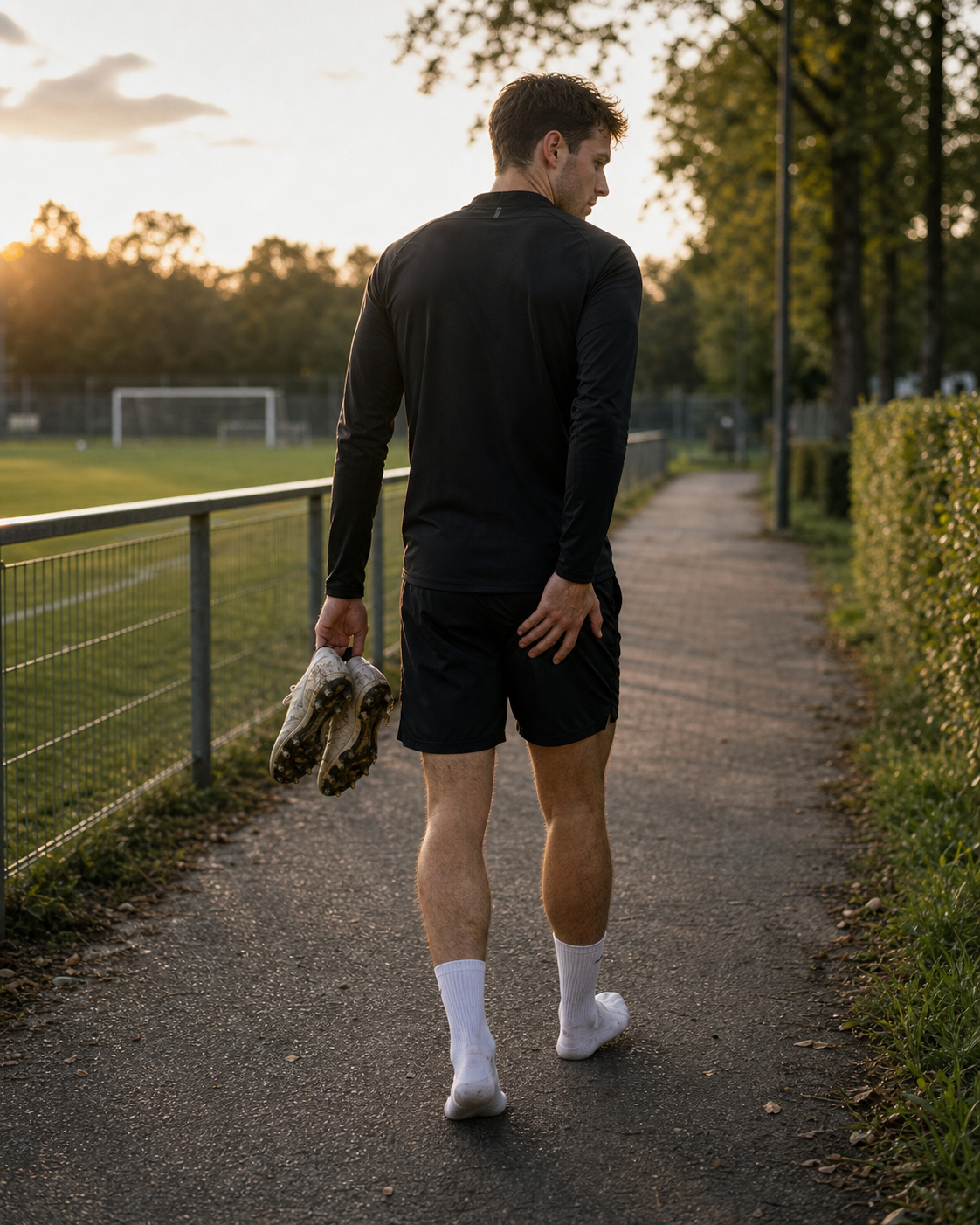
The most common mistake is thinking too early in terms of team participation instead of load steps. A player can take part in part of a session and still have nowhere near enough sprint load, braking capacity or deceleration tolerance yet.
Common mistakes are:
- returning to full sprinting too early;
- moving back into full-sided games too early;
- not distinguishing between jogging along and joining explosively;
- failing to rebuild strength separately alongside field work.
That is why a phased route usually works better:
- daily loading and light running load have to feel stable again first;
- then controlled strength and braking load;
- only later more sprinting, acceleration and match-like actions.
For the early phase, hamstring injury: what to do in the first 48 hours remains the most logical first read.
Why prevention is more than stretching
In football, prevention is not the same as simply loosening up. Stretching can have a place, but it does not automatically protect against sprint-related hamstring problems. Much more relevant is how strong and load-tolerant the hamstrings are when speed and braking moments rise.
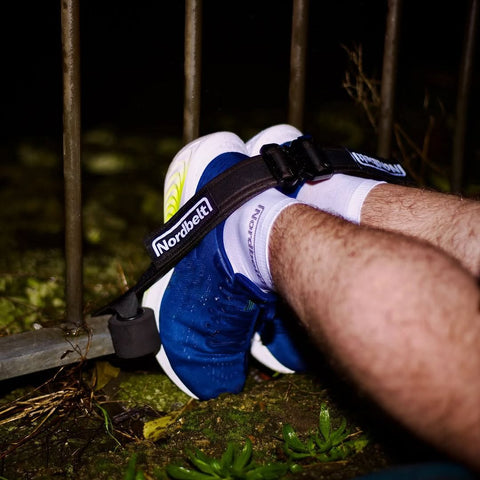
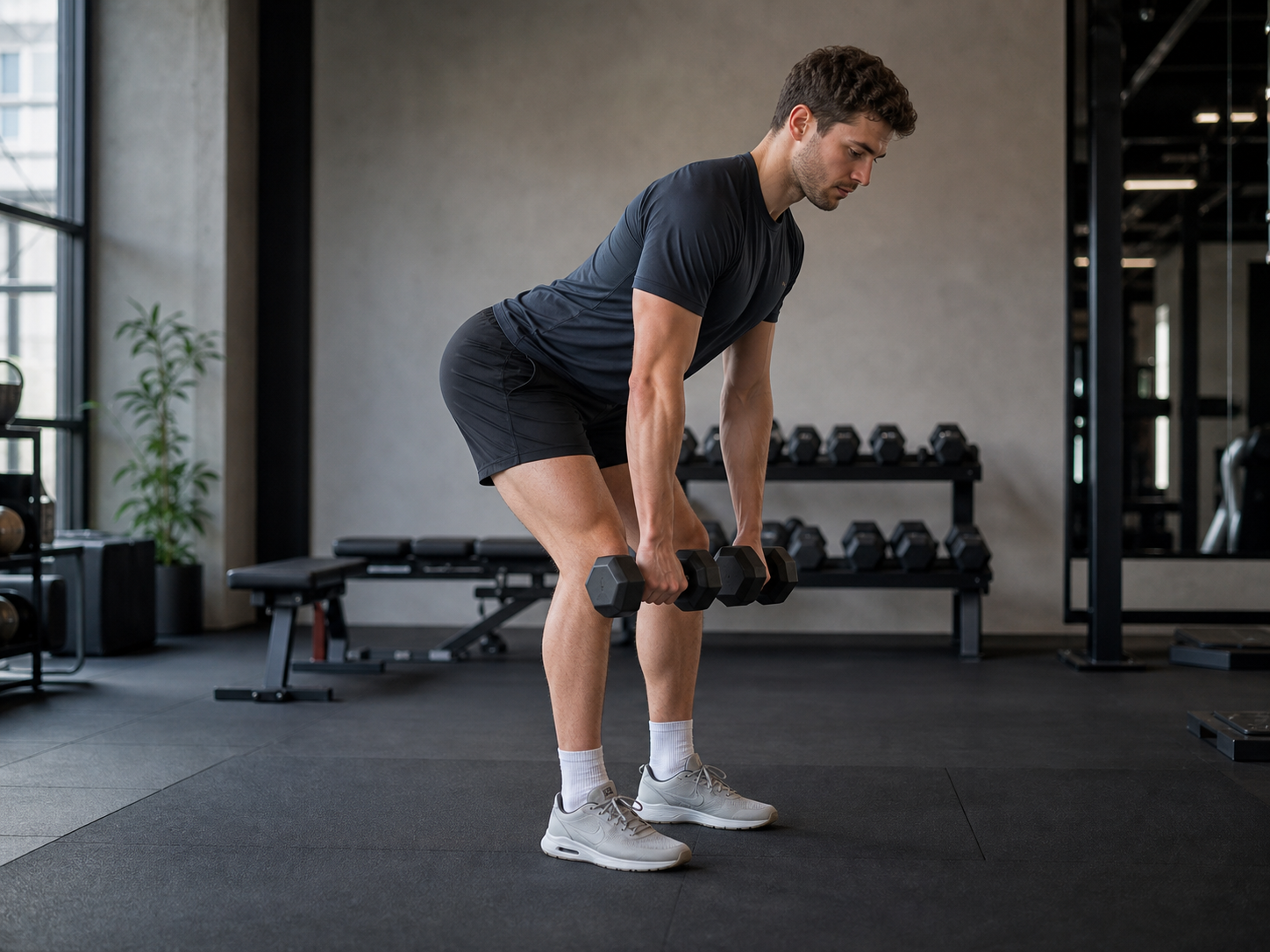
That is why eccentric hamstring work gets so much attention in the literature. Reviews and trials around Nordic hamstring training show that targeted hamstring strength can play a clear role in injury prevention in football populations (Rudisill et al., 2023) (Hasebe et al., 2020).
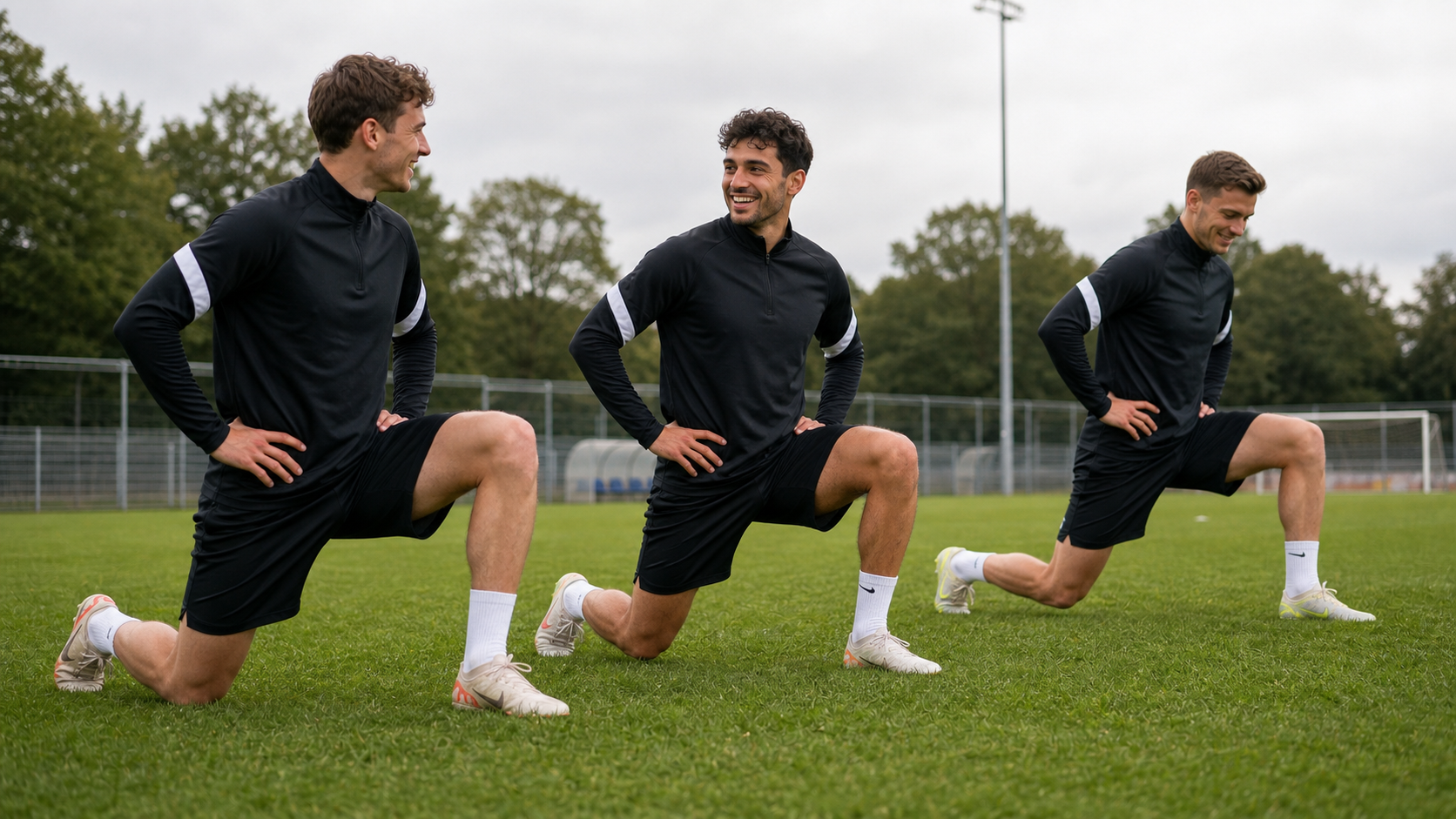
That does not mean every footballer should jump straight into heavy Nordics, but it does mean prevention is mainly a strength and loading question, not only a mobility question.
What fits better in a football week: loose mobility or targeted hamstring strength?
For many footballers, the honest answer is that both can have a place, but they do not do the same job. Mobility or loosening-up drills can feel useful for preparation, but on their own they do not build clear sprint or braking capacity.
Targeted hamstring strength fits the real football risk profile better, because it works on loads that sit much closer to acceleration, braking and repeated sprinting. In practice, the smartest question is therefore not which one is best, but what role each one has inside the same training week. Mobility can support preparation; strength build-up contributes more directly to real load tolerance.
When does strength build-up become relevant again?
As soon as the acute irritation settles and normal movement improves, strength build-up becomes important again. First in a dosed way, later more specifically.
That matters even more for footballers because the gap between I can do something again and I can sprint and duel again is large. That is exactly why the bridge to everything about the Nordic hamstring curl and later to the how-to guide makes sense, but not in the first sensitive phase of the problem.
Frequently asked questions
Why are hamstring injuries so common in football?
Because football combines sprinting, braking, accelerating and unpredictable movement. The hamstrings are not only loaded heavily, but also loaded in a highly variable way.
When can I play football again?
Not just when easy running works again, but only once you can tolerate progressively higher load and cope with heavier football-specific stimuli again. Team training and match load are not the same thing.
Does stretching alone help prevent new hamstring injuries?
No. Stretching can be a small part of the picture, but prevention revolves much more around strength, load build-up and how well you can handle high speed and braking again.
Is Nordic training useful for footballers?
Often yes, precisely because eccentric hamstring strength is relevant for sprint and braking load. But timing and build-up still decide everything. Even a good exercise is not smart when it is introduced too early or too heavy.
If you want the broader injury context first, continue with hamstring injuries: types, causes, symptoms and recovery.
If symptoms keep changing or pain returns during heavier training, step back to easier control work and use the related Nordbelt guides before increasing load again.
Use this article as a decision guide, not as a reason to rush back. If pain returns during running, football or heavier strength work, rebuild walking, easy training, strength control and faster efforts in separate steps. Keep harder hamstring work away from your first speed sessions, and only increase load when the next-day response stays calm.