

Training hamstrings with dumbbells: 6 exercises and safe progression


Training hamstrings with dumbbells works best when you are not chasing the heaviest possible exercise, but building control over your hips, knees and trunk tension. Start with a Romanian deadlift, then add single-leg variations, bridges and lunges, and only increase the load when you recover well the next day. Dumbbells are a strong way to build hip-dominant hamstring strength. For heavier eccentric loading, sliders or assisted Nordics can come later, but they do not need to be part of week one.
In short
A good dumbbell hamstring session combines two movement patterns: hip hinging and knee flexion. In a hip hinge, you move from the hips, as in a Romanian deadlift. In knee flexion, you pull your heel toward your glutes, as in sliders or curls. Dumbbells are especially useful for the first pattern: they help you build tension in the back of the thigh without immediately needing a machine, barbell or heavy Nordic variation.
If you first want the broader exercise overview, start with the guide to hamstring exercises. This article is narrower: how to use dumbbells practically, which technique mistakes to avoid, and when the next progression makes sense.

Why dumbbells work well for hamstrings
Dumbbells make hamstring training accessible because you can start small. A light pair is enough to learn the movement. You do not have to begin with a barbell, a machine, or a maximal eccentric exercise. That is useful if you train at home, are new to strength training, or notice that your hamstrings get stiff quickly after heavy sessions.
The main rule is simple: your hamstrings should feel tension while your lower back stays quiet. In a Romanian deadlift, push your hips back, keep the dumbbells close to your legs, and stop when you feel controlled hamstring tension. Depth is not the goal by itself. If your lower back rounds or your knees lock hard, you have probably moved past your control point.
Hamstring exercises with dumbbells: the basics
Use these three hamstring exercises with dumbbells as your starting block.
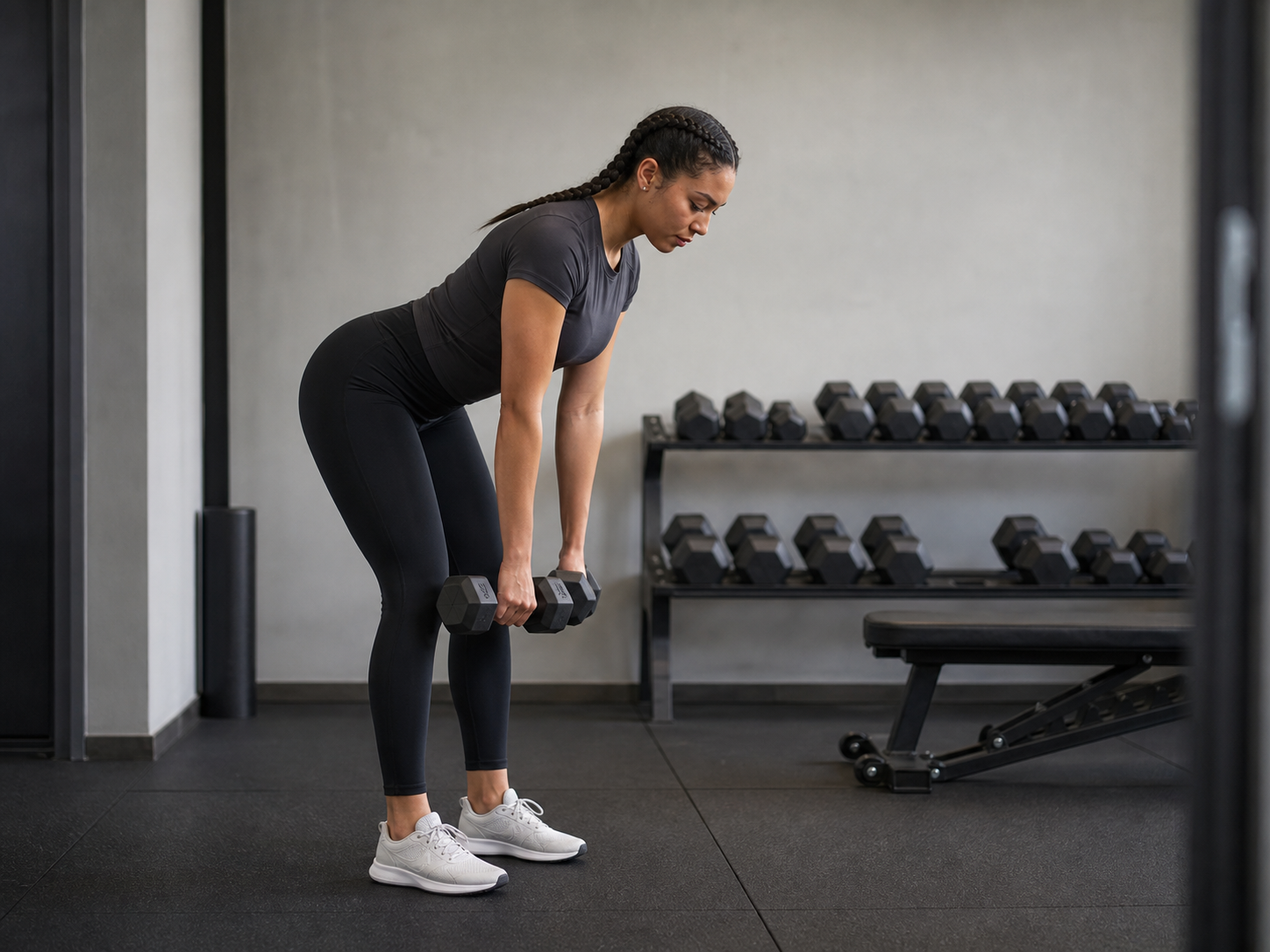
- Dumbbell Romanian deadlift. Hold two light dumbbells, or one dumbbell with both hands. Push your hips back, keep your back long, and stand up calmly. Do 2 to 3 sets of 8 to 10 reps.
- Dumbbell hip hinge from a slight elevation. Stand with your toes slightly raised on a thin mat or plate. Use the same hinge movement, but keep the load lighter. This helps if you feel tension quickly and do not yet need a large range of motion.
- Dumbbell glute bridge. Place a dumbbell on your hips, set your feet firmly on the floor, and lift in a controlled way. Pause for a second at the top. This is easier on the lower back and helps your hamstrings and glutes work together.
This base fits well next to a home programme. In hamstring exercises at home, you will find more machine-free options; use dumbbells as extra load, not as a reason to make every set heavier.
Take your Nordic curl from the first rep to week 10.
A concrete 7-page plan: build up week by week, without pushing too fast.
- 01A clear week-by-week progression
- 02Technique and the mistakes to avoid
- 03A simple log you will actually use

≤51%
✓Backed by research
Van Dyk et al., 2019: meta-analysis of programmes with NHE. Not an effect test of Nordbelt or this protocol.
Open the download page again or check the email we sent you.
Open the download page ↗Dumbbell hamstring exercises for single-leg control
Once the regular Romanian deadlift feels good, you can add single-leg control. The single-leg dumbbell Romanian deadlift is the most important exercise for that step. Hold a light dumbbell in one hand, use your free hand against a wall if needed, and move slowly from the hip. Keep a soft bend in the standing knee. Let the back leg move as a counterweight.
Do not make balance the main test too early. A good single-leg RDL is not a balancing trick. If your foot wobbles, your hip opens, or your back rounds, make the exercise easier: use less range, less weight, or one hand for support. Only add load when you can complete three calm sets with the same position each rep.
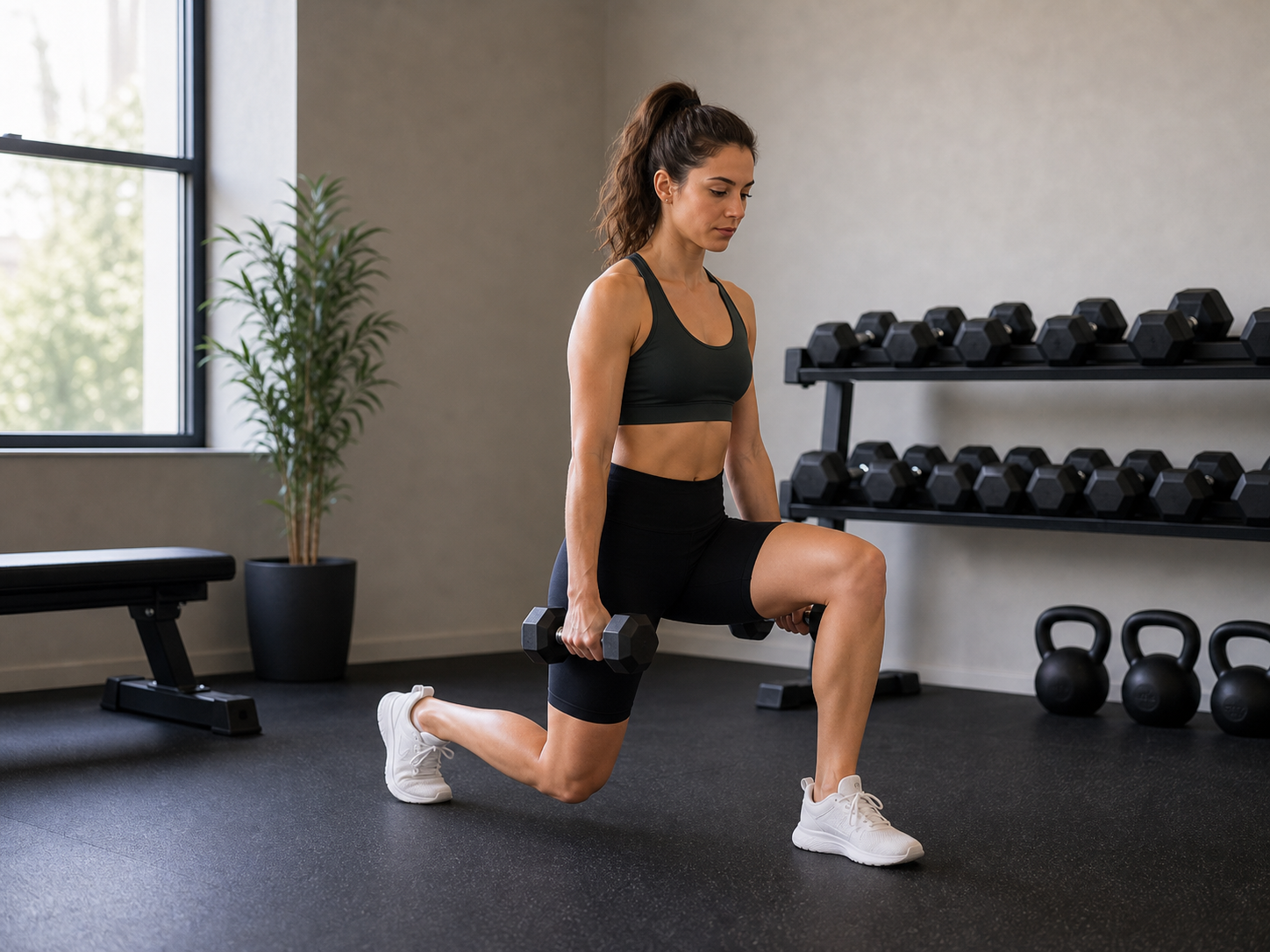
A second single-leg option is the dumbbell reverse lunge. It does not train only the hamstrings; it also loads the glutes and thighs. Step back calmly, keep your trunk long, and push yourself back up through the front leg. It is not a pure hamstring exercise, but it is a useful bridge toward stairs, running and field-sport strength.
Build stronger hamstrings with dumbbells without forcing it
Building stronger hamstrings with dumbbells needs a clear order: technique first, volume second, weight third. Choose two exercises per session. For example, do Romanian deadlifts and glute bridges on day 1, then single-leg RDLs and reverse lunges on day 2. Keep 48 hours between heavier hamstring sessions if you get sore quickly.
A simple four-week progression works well:
- Week 1: 2 sets per exercise, light load, stop well before fatigue changes your technique.
- Week 2: 3 sets per exercise if week 1 felt controlled.
- Week 3: add a little load, but keep the same technique.
- Week 4: add a single-leg version or slightly increase the range of motion.
Eccentric hamstring training can be useful for strength and muscle adaptation, but the stimulus has to match your current capacity. Reviews of Nordic hamstring training show that eccentric strength and muscle architecture can improve, but that does not mean every athlete or home trainee needs the hardest variation immediately (Medeiros et al., 2020). Treat dumbbells as the base layer: strong enough to progress, light enough to preserve technique.
From dumbbells to sliders or assisted Nordics
Dumbbells mainly train the hip-dominant side of the hamstrings. For a more complete programme, you may later add knee-dominant hamstring loading as well. That can mean slider curls, hamstring walkouts, or assisted Nordics. In eccentric hamstring exercises, you can see how to build that heavier lowering phase gradually.
The Nordic hamstring curl is a strong but demanding next step. Research on programmes with Nordic hamstring exercises shows favourable effects on hamstring injuries in sport populations, especially when the exercise is used consistently and progressively (van Dyk et al., 2019; Petersen et al., 2011). For most people, the practical route is therefore: dumbbell control first, sliders or assisted Nordics second, and full Nordics later.
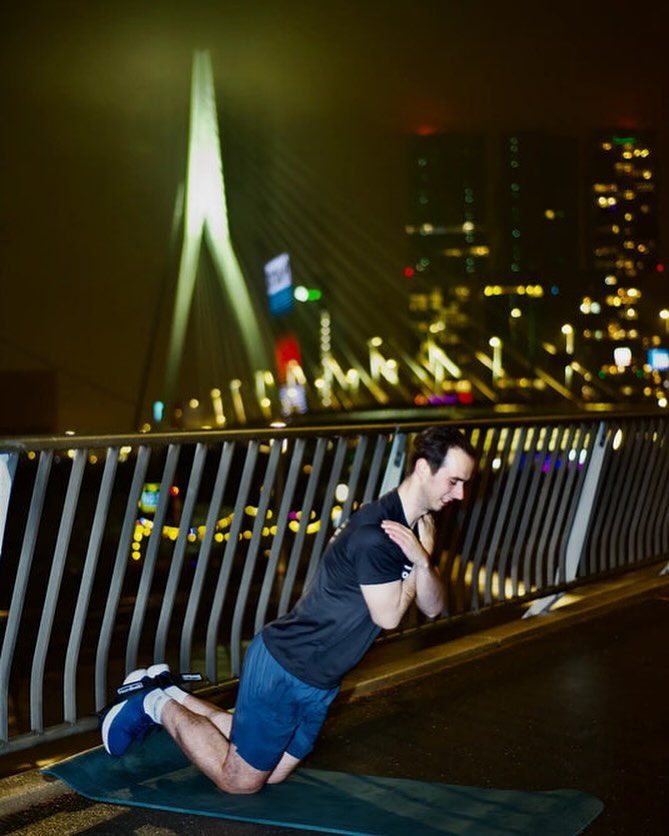
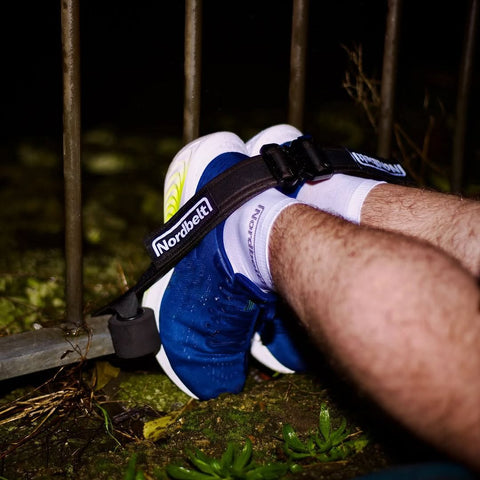
If you want to add assisted Nordics at home, you need a low and reliable ankle fixation point. The Nordic hamstring curl guide explains the exercise. The how-to guide shows how to set up Nordbelt. Consider Nordbelt only once your dumbbell base is stable and you want a repeatable setup for further eccentric progression.
Frequently asked questions
Which hamstring exercises with dumbbells are best?
The best start is a dumbbell Romanian deadlift, combined with a glute bridge and later a single-leg Romanian deadlift. Together, they train hip strength, control and tension in the back of the thigh. Add more complex variations only when your lower back stays calm and you recover well the next day.
How heavy should dumbbell hamstring exercises be?
Use a load that lets you complete 8 to 10 smooth reps without losing your back position. The last reps may feel like real work, but they should not become messy. If you only feel tension in your lower back, the load is too heavy or the range is too large.
Can I do dumbbell hamstring exercises at home?
Yes. A pair of dumbbells and some floor space are enough. Start with Romanian deadlifts, glute bridges and light single-leg variations. If you later add Nordics or assisted Nordics at home, always test the anchor point first and begin with a short range.
How do I make my hamstrings stronger with dumbbells?
Train twice per week, choose two exercises per session, and progress only one factor at a time: first sets, then weight, then range or single-leg control. Keep the same exercises for a few weeks before changing everything. Stronger hamstrings come mostly from repeatable progression.
Is the single-leg dumbbell Romanian deadlift beginner-friendly?
Yes, but only if you make it simple. Start with very little weight, use one hand against a wall, and move no deeper than you can control. If balance takes over the whole exercise, use the regular Romanian deadlift or a bodyweight single-leg hinge first.