★ 4.6
Nordic curl with hip flexion: variation or loss of technique?

Deliberate hip flexion differs from unintentionally sitting back. Compare your intention with the movement without turning a laboratory angle into a home prescription.
FREE 10-WEEK TRAINING PROTOCOLSend my free protocol ↓A Nordic curl with hip flexion can be a deliberately chosen variation. The difference from unintentionally sitting back lies in what you choose beforehand and actually maintain during the repetition. Agree on a starting position and movement limit, check whether they remain recognisable and stop when you lose control. A larger hip angle is not a goal in itself. This explanation helps you compare execution; it does not prescribe an ideal angle or personal training programme.
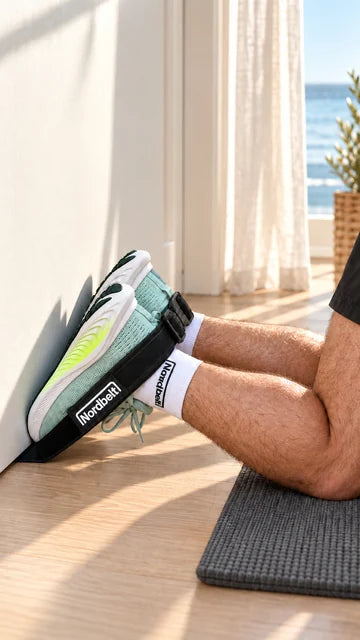
For Nordic curls at home, Nordbelt ankle fixation without a training partner can make the setup practical. You still need a suitable anchor, low symmetrical fixation and clear space. The strap does not choose or monitor your hip position. Follow the normal attachment instructions; do not change the mounting to recreate a laboratory variation.
What changes when you bend at the hips?
In a usual Nordic, you kneel with your ankles secured and move your body forwards from the knees while resisting the descent. Hip flexion changes the relationship between your trunk and thighs. That differs from simply leaning further forwards while keeping the same body position. Start with the Nordic hamstring curl guide for the basic movement.
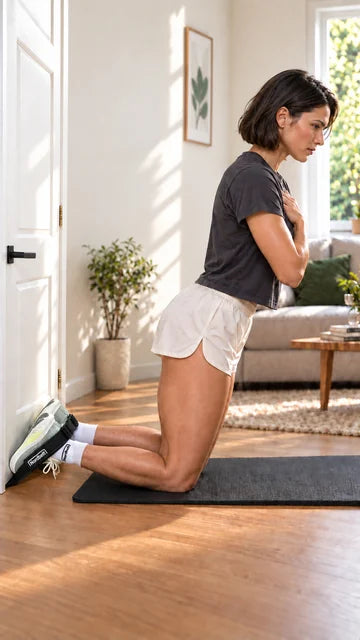
A deliberate variation starts with a clear choice before the descent. Unintended sitting back develops during an attempt in which you meant to maintain your chosen position. Do not judge a single final still image without knowing the task. Record the starting position and watch what changes along the way. This helps you avoid automatically counting a different repetition as progress.
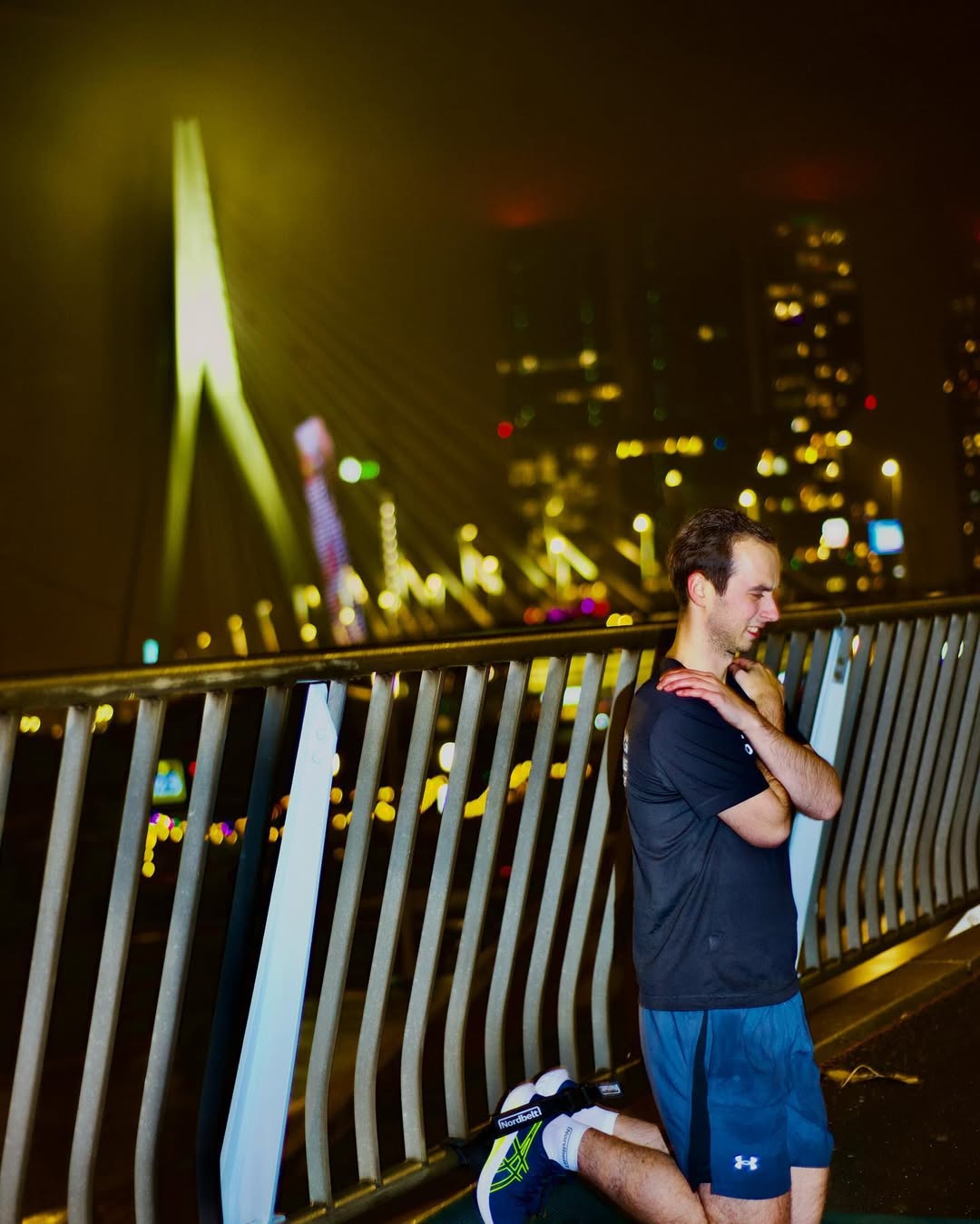
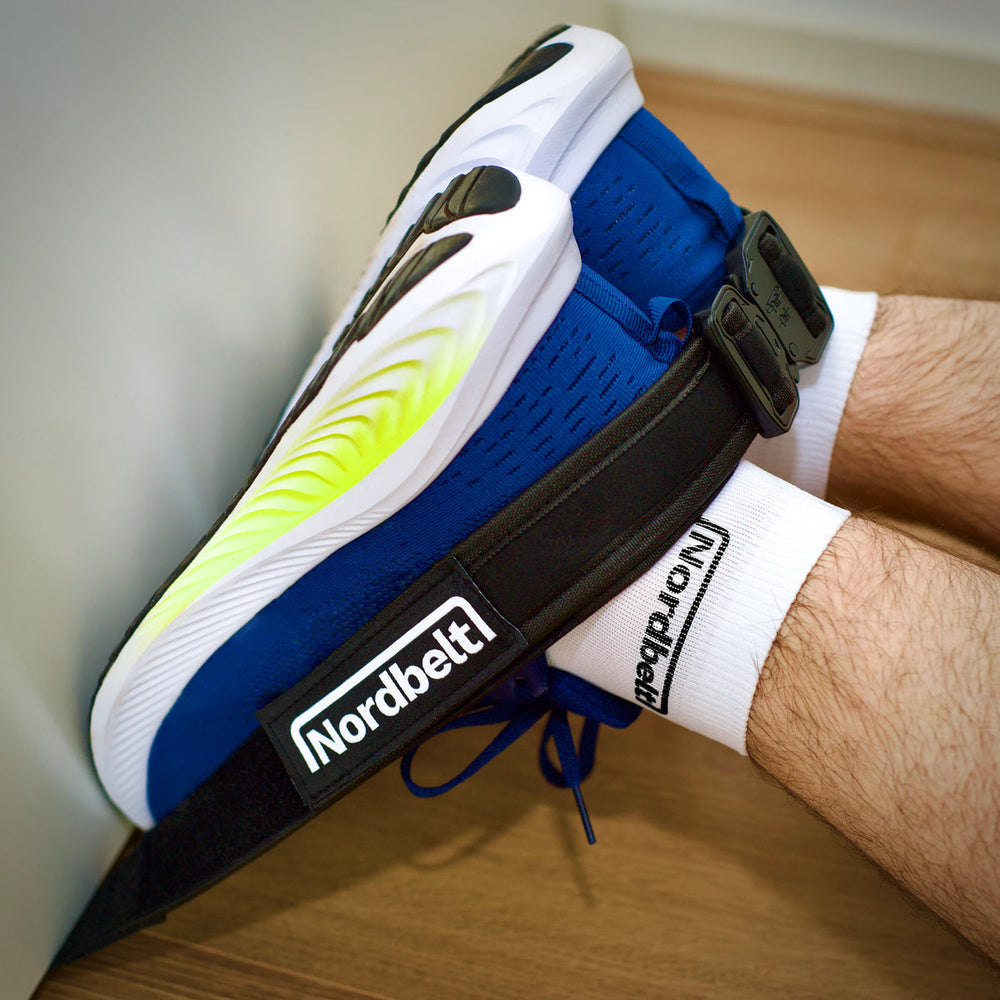
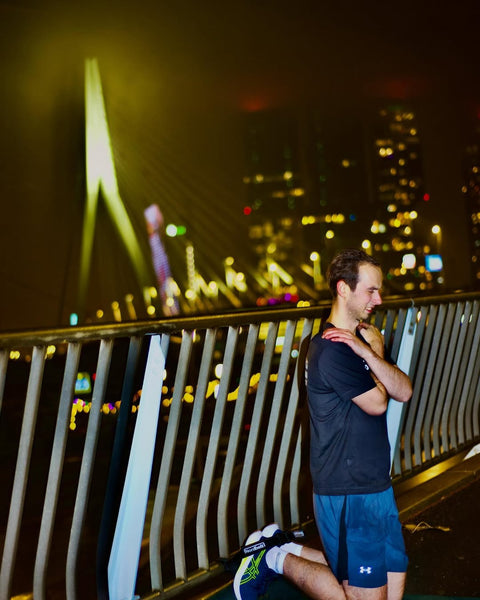
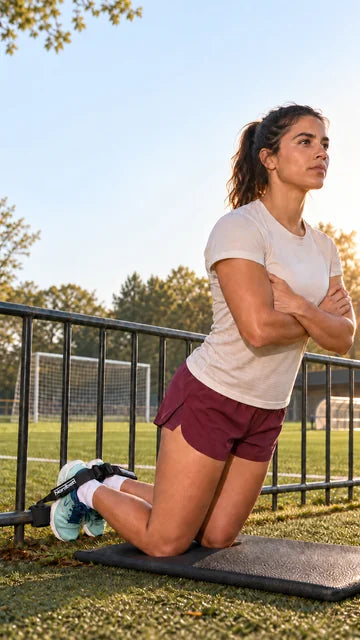
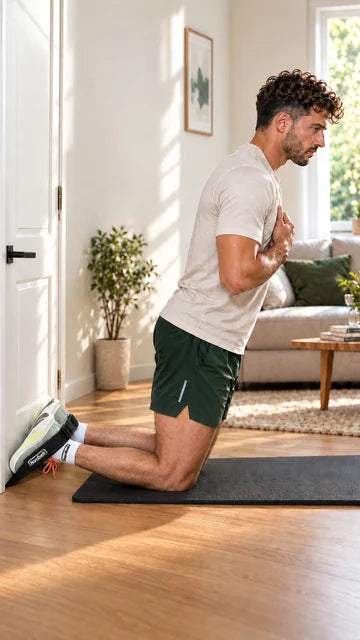
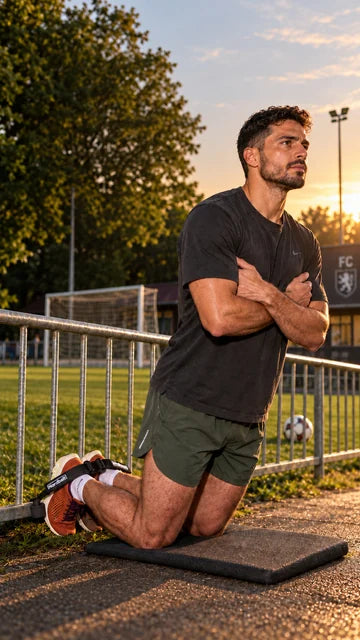
Starting position in a Nordic setup. This image does not demonstrate a descending repetition with deliberate hip flexion.

What the research does and does not show
Šarabon and colleagues studied 18 adults with resistance-training experience and little Nordic experience. Hip instructions were compared on a lower-leg support inclined at 20 degrees. With instructions for 50 and 75 degrees, participants did not maintain the requested hip angle. This was an acute biomechanical comparison, not a training study establishing a best angle or fewer injuries (Šarabon et al., 2019).
The useful lesson is limited but important: an instructed angle is not automatically the angle performed. This experiment cannot give you a fixed target angle for your floor setup. The inclined laboratory support is also not an instruction to rebuild a bench, door anchor or strap at an angle at home. The study did not test a Nordbelt setup (Šarabon et al., 2019).
In another study, ten healthy men performed Nordic repetitions while muscle activity and movement were measured. Trunk and hip muscles were active alongside the hamstrings. Such acute EMG measurements do not establish muscle growth, individual injury risk or superior technique (Narouei et al., 2018).
Compare your intention with your execution
Use this practical observation sequence as an editorial aid when reviewing a recording, not as a validated movement screen. A phone image is not a precise angle measurement and does not provide medical clearance. If unsure, ask a qualified trainer to assess your execution; discuss symptoms with an appropriate healthcare professional.
- Name the task. Are you practising the usual movement or have you deliberately chosen a different starting position? Without that agreement, a change in posture is hard to assess.
- Keep conditions the same. Use the same ankle fixation, knee support and any assistance. Do not change posture, tempo and movement distance at the same time.
- Watch the whole descent. View your trunk and thighs from the side, with your full body in frame. A recording of only your shoulders cannot show what your hips did.
- Choose a recognisable limit. End the attempt before you unexpectedly drop or lose the agreed position. Record where that happened without assigning an exact angle.
- Record what you actually achieved. For example, note that the starting position was maintained at first and changed later. Do not automatically label the entire repetition as the same variation.
Suppose you start upright and increasingly sit back halfway down. If that was not your intention, adjust the chosen execution. The existing guide to Nordic hamstring curl mistakes helps with that basic check. This page does not replace that guide: it addresses the difference between a deliberate task and what actually happens.
Take your Nordic curl from the first rep to week 10.
A concrete 7-page plan: build up week by week, without pushing too fast.
PDF7 pagesStraight to your inbox
- 01A clear week-by-week progression
- 02Technique and the mistakes to avoid
- 03A simple log you will actually use

Open the download page again or check the email we sent you.
Open the download page ↗≤ 51%
✓Backed by research
Van Dyk et al., 2019: meta-analysis of programmes with NHE. Not an effect test of Nordbelt or this protocol.
Keep the home setup ordinary and repeatable
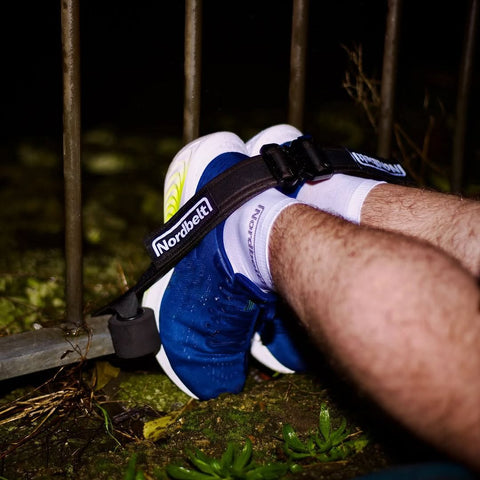
Choose only a door, weight bench, fence or beam that is suitable under its conditions of use and does not move under the expected load. A loose chair or light bench is not automatically a suitable anchor. Test the attachment with your hands first, secure both ankles low and symmetrically and use comfortable knee padding. Keep your hands free and the space ahead clear so you can catch the movement in time.
Follow the Nordbelt how-to guide for suitable door, bench or fence attachment. For choosing and checking the complete setup, see setting up Nordic curls safely at home. A different hip position does not require a higher anchor, an inclined surface or a different attachment method.
Setup and movement checks answer different questions. A solid anchor does not show that you control a chosen variation. A recognisable posture likewise does not establish that a door or fence is suitable. Checking each separately makes clear what you have assessed and what remains uncertain.

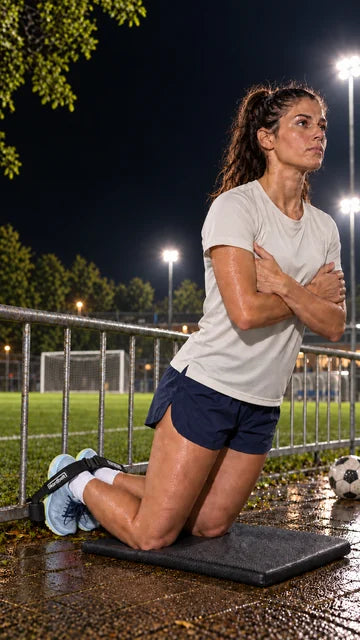
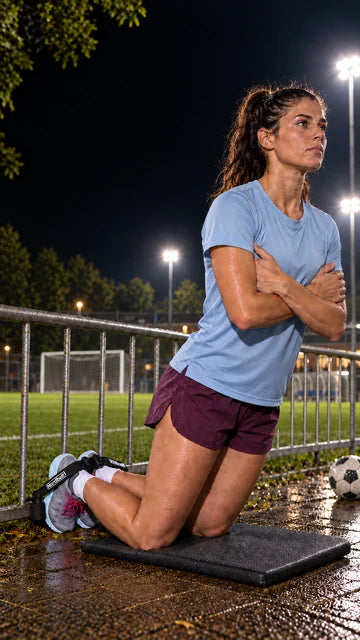
Context image for recording your chosen execution and observations; not a measurement or personal training advice.
When to stop first
Stop for unexpected sharp pain, an anchor that shifts or a movement you can no longer catch. Do not try to solve symptoms by bending further at the hips. Have new or persistent pain assessed by a doctor or physiotherapist. After a recent injury, exercise selection belongs within your personal care; this article is not rehabilitation advice.
You do not need to add a hip variation for an ordinary Nordic to count. If you cannot yet perform comparable repetitions, first work on a suitable, manageable basic variation. The useful outcome of reviewing your recording may be to add nothing for now.
Frequently asked questions
Is hip flexion during a Nordic curl always a mistake?
No. A variation chosen beforehand differs from an unintended change during the descent. Name your intention first and then assess whether you perform it. A deliberate choice does not automatically make a variation suitable for everyone; control and training context still matter.
What hip angle should I maintain?
These studies do not provide a universal home target angle. In the laboratory, the requested angle was not always maintained (Šarabon et al., 2019). Do not use the reported research settings as a personal prescription or rebuild your attachment for them.
Does feeling the muscles more prove that the variation works better?
No. A sensation during exercise is not a comparison of training outcomes. A difference in measured muscle activity alone is also not evidence of extra muscle growth or fewer injuries. The EMG study discussed here measured acute activity, not a long-term outcome (Narouei et al., 2018).
Can I measure my hip angle reliably with a phone?
Use a recording mainly to compare your intention with the movement as it unfolds. Camera position, clothing and visible body parts affect what you can assess. Do not assign a precise number to an unclear side view. Ask for help with a focused technical assessment; pain requires appropriate healthcare assessment.