★ 4.6
Do Nordic curls make your hamstrings more flexible?

Six weeks in, you can lower yourself further before catching your weight. What does that tell you about your hamstrings? A training video and a flexibility test answer different questions.
FREE 10-WEEK TRAINING PROTOCOLSend my free protocol ↓Nordic curls can improve hamstring flexibility. In one study, people who started out with limited knee extension could straighten their knee further after six weeks. If your video shows you leaning further forward before you need your hands, you can see how much of the Nordic curl you can now control. To see whether your flexibility changed as well, compare the same hip or knee measurement before and after your training block. Henderson et al., 2025 and Delahunt et al., 2016.
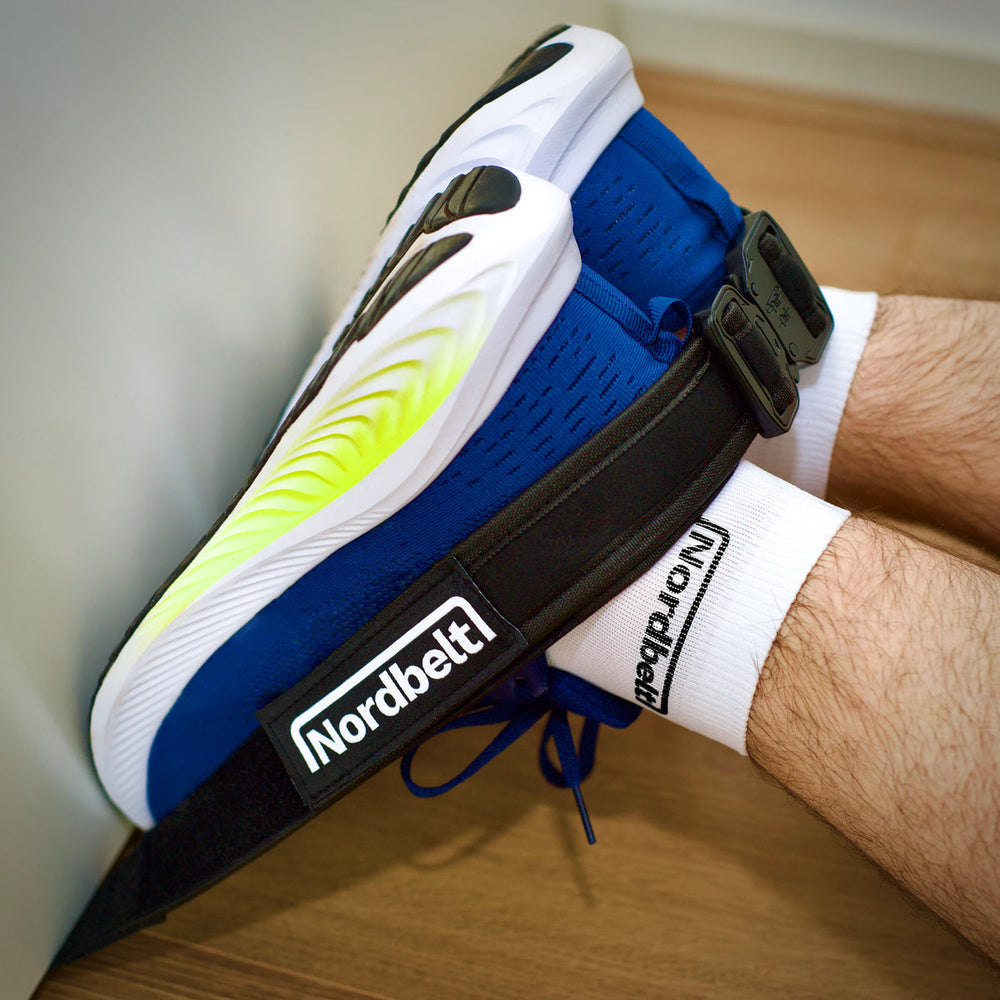
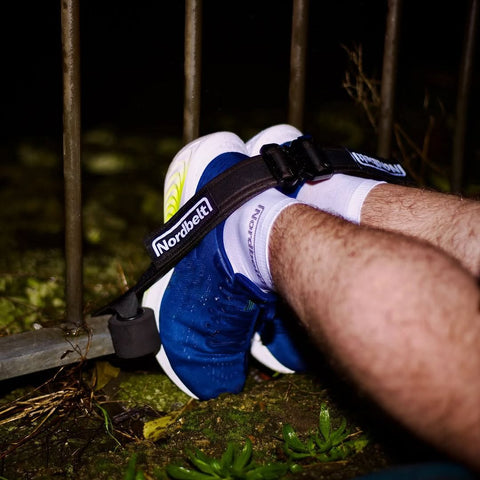
Perhaps a teammate holds your ankles at the club and you train on your own at home. You can see how Nordbelt secures your ankles at a door, bench or fence. Three short videos show how to choose an anchor, fasten the buckle and adjust the strap. That lets you practise the same kneeling exercise at home. You can keep track of your flexibility without the strap.
What can you see when you can lean further forward?
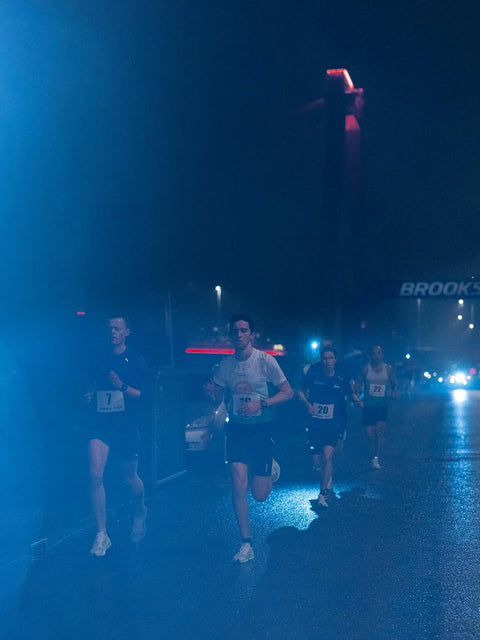
Pull up two clips, one from your first session and one from your latest. In the first, you reach for the floor as soon as you lean forward. In the second, you lower yourself a little further before catching your weight. Check that your ankles stayed put and that you kept the same line through your hips in both clips. Now look for the moment you stop lowering yourself smoothly. Your hands may not touch the floor until a little later.
Researchers saw a similar change in healthy men after six weeks of Nordic training. The men could control more of the forward fall. The team measured the knee angle during the exercise and the strength of the hamstrings as they resisted the movement. Picture the same athlete lying on his back while someone gently raises his leg. The angle from his Nordic curl can't tell you how far his leg will lift in that position. If you're comparing training clips, read about the point where you lose control of the Nordic curl. Delahunt et al., 2016.

Who could straighten their knee further after six weeks?
Henderson and colleagues enrolled 44 people who had no symptoms but showed limited knee extension at their first test. Each person lay on their back with the thigh raised. The thigh stayed in place while the knee was gently straightened. The researchers measured the angle at the knee. If your lower leg moved further towards straight at the next appointment while your thigh stayed in the same position, you had gained movement on that test. Henderson et al., 2025.
The participants were randomly assigned to Nordic curls, static stretching or a control group. After six weeks, both the Nordic group and the stretching group had improved more on the knee test than the control group. If you can already straighten your knee easily in that position, the finding tells you less about what to expect. It also leaves open whether you'll reach further towards your foot when sitting on the floor. You'd need to compare that movement on two occasions to find out. Henderson et al., 2025.
What changes when the knee stays straight?
Picture an athlete lying on a treatment table. The person doing the test lifts the whole leg while keeping the knee straight. This time most of the movement is at the hip. An angle on this score sheet describes a different movement from the knee extension in the first study. Even if both sheets are labelled “hamstring flexibility”, subtracting one angle from the other won't tell you how much flexibility you've gained.
Suskens and colleagues studied male basketball players who were free of injury. They compared a Nordic programme, a different hamstring exercise and usual basketball training. They analysed results from 53 players. Over twelve weeks, there was no clear difference between groups in the change in how far the straight leg could be raised passively. The same was true when the players straightened their own knee in a separate test. Flexibility was a secondary measure. The researchers' main interest was how the muscles themselves changed. Suskens et al., 2023.
The basketball players had not been selected for the limited knee extension seen in the first study. The studies also used different comparison groups and training periods. That makes it hard to pin the different findings on the choice of test alone. For your own sport, start by naming the movement in which you actually want more range. Henderson et al., 2025 and Suskens et al., 2023.
Take your Nordic curl from the first rep to week 10.
A concrete 7-page plan: build up week by week, without pushing too fast.
PDF7 pagesStraight to your inbox
- 01A clear week-by-week progression
- 02Technique and the mistakes to avoid
- 03A simple log you will actually use

Open the download page again or check the email we sent you.
Open the download page ↗≤ 51%
✓Backed by research
Van Dyk et al., 2019: meta-analysis of programmes with NHE. Not an effect test of Nordbelt or this protocol.
What should you write in your training diary?
Imagine two entries in your notebook. One reads, “Nordic curl, same mat and ankle support, needed my hands later.” The other says, “Right leg, coach raised it with the knee straight, reached the same point as last time.” Both are worth keeping. You learned something about your control in the Nordic curl and recorded a repeat result for a different movement.
For a flexibility measurement you'll want to look up in a few weeks, record which leg you tested, who moved it, whether the knee was bent or straight and what told your coach to stop. If you can, use the same coach and test at the same point in relation to your warm-up. If your first measurement was taken before training, jot that down. You'll know which conditions to repeat. If an old video is all you have, use your next flexibility measurement as your starting point.
What should you keep the same when training at home?
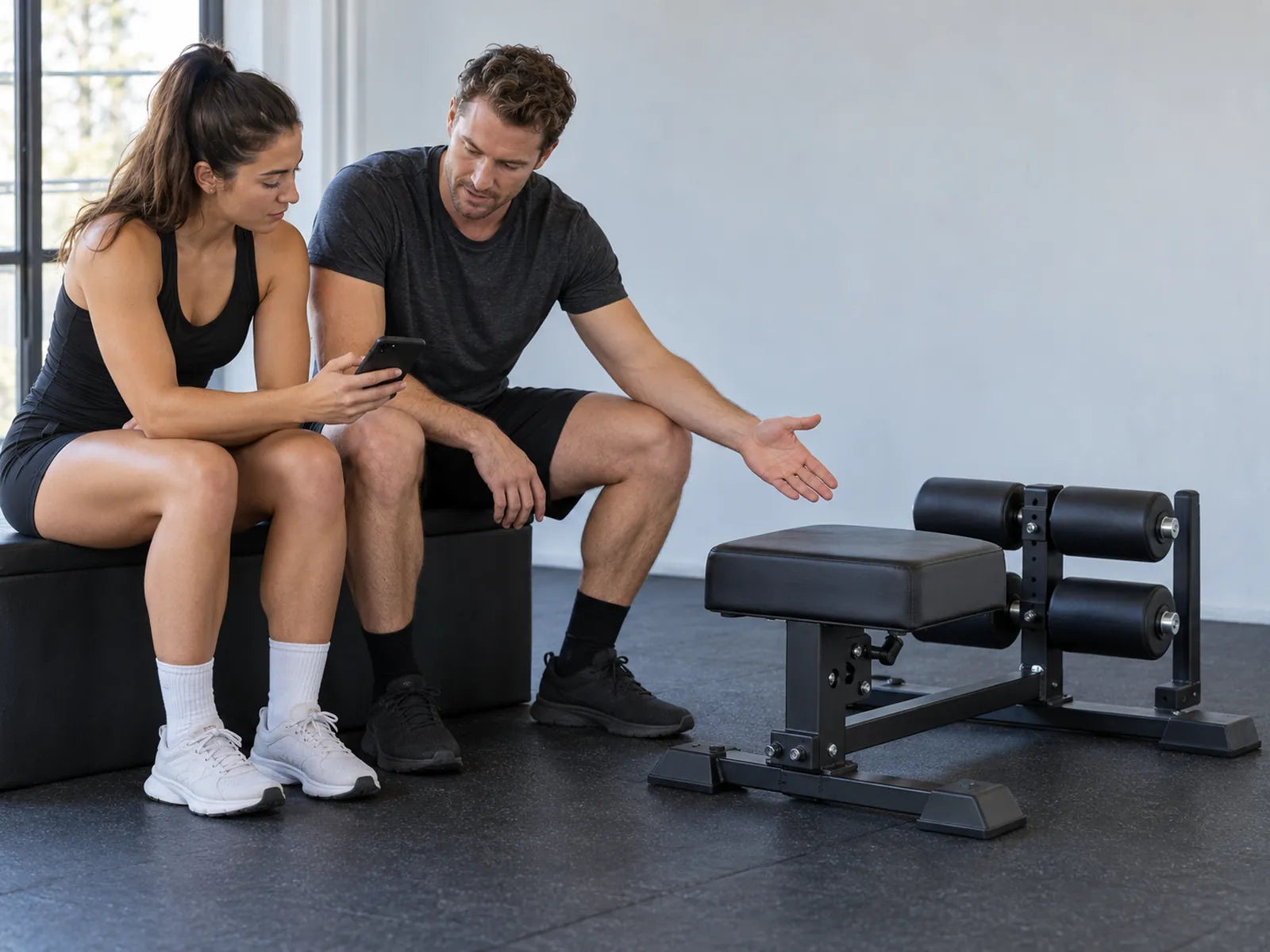
Use the same surface and ankle support for your next clip. At a fixed bench, close the buckle and adjust the strap until your ankles stay in place as you lean forwards. Pull on the strap in the direction you'll load it before starting. If the bench slides or tips, choose another anchor. A door must close fully and stay closed throughout the set. The guide to door, bench and fence setups shows how to check the attachment in each case.

Frequently asked questions
Should I be able to touch my toes after six weeks?
There's no set deadline. Bending forward to touch your toes is a different movement from lying down while someone straightens your knee. If you want to know why you can't reach your feet in a forward bend, read what a toe touch can tell you. Keep a record of the movement you want to improve.
Can I drop my stretches now?
Before you drop a static hamstring stretch, think about the movement you use it for. If you want to get into a particular position more comfortably, check with your coach whether that position has become easier. In the study that selected people with limited knee extension, the stretching and Nordic groups both improved on the knee test. That result leaves open whether dropping an exercise would suit your own goal. Henderson et al., 2025.
What if only my Nordic curl improves?
Write down what you can now do, such as how far you can lower yourself smoothly with the same ankle support. If your aim was to control more of the repetition, that's the change you were looking for. Give a hip or knee measurement its own line in your diary so an unchanged result is easy to see too.
Do I need a partner to measure flexibility at home?
If you're comparing a previous passive measurement, try to repeat it the way it was done the first time. Someone else moved your leg then. Lifting it yourself gives you a different measurement. For ordinary Nordic curl practice, you can train on your own if you have a suitable place to secure your ankles.