

Nordic curl circuit for sports teams: stations without queues


A Nordic curl circuit for sports teams only works when the logistics are as clear as the exercise itself. Divide athletes across several stations in advance, give every station the same checking sequence and allow enough time to get in, test, perform the set and get out. This prevents one fixed bench from creating a queue or an athlete from copying a teammate’s setup under time pressure.
The quick answer is to build small groups around identically organised workstations while continuing to adjust each athlete individually. Only move the group on after the strap and anchor have been unloaded, the area is clear and the next regression is ready. A circuit is therefore not a way to skip checks; it makes them visible and repeatable.
How many Nordic curl stations does a team session need?
Start with the available time, not a fixed number. For each athlete, calculate the time needed to get in, complete a light tension test, perform the agreed set, unload the setup and get out. Then add a realistic reset. Divide the total station time by the number of minutes available for this block. This shows how many parallel workstations are needed to work without rushing.
Make every Nordic curl station in the team session recognisable. Use the same sequence at each workstation for the anchor, knee mat, clear movement area, catch and exit. The adjustment may differ by environment; the checking logic remains the same. The guide to a safe Nordic hamstring curl setup describes the environmental checks that also remain necessary at every team station before each round.

Ankle fixation for Nordic curls at home
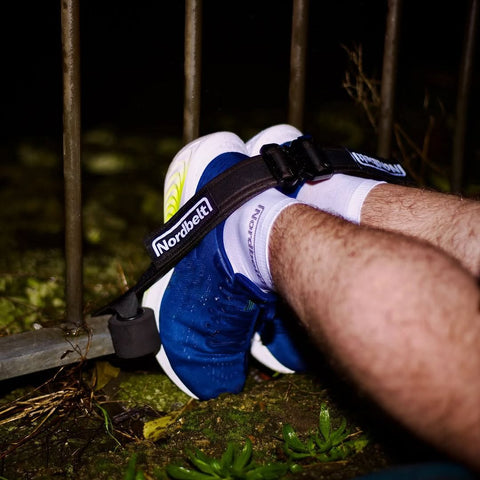
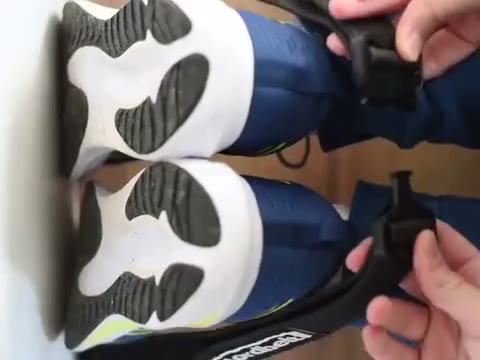
Do you also want athletes to add Nordic curls at home? The relevant product job is then stable ankle fixation that lets them perform the exercise without a training partner or large fitness machine. With Nordbelt for Nordic curls at home, you can assess this compact setup function and carry the same checking sequence over from the supervised team session. The boundary is clear: equipment does not choose the athlete, regression, range of motion or training dose, and it cannot make an unsuitable anchor suitable.
Only use this home handover after an athlete can repeat the preparation under supervision: check the anchor as intended, adjust both sides calmly, test light tension, prepare the catch and start with the agreed regression. Home is a new environment and therefore requires the full check again.
Set up every hamstring strength station for the sports team in the same way
Divide each workstation into four zones. The anchor zone contains only the intended attachment point. The entry zone gives the athlete room to kneel without rushing and have the ankle fixation checked. The movement zone in front of the knees stays clear. The catch zone has the preselected regression within reach, such as a raised surface, hand catch or another suitable task.
Mark the kneeling position and the boundaries of the movement zone with a fixed visual reference. This lets a coach quickly see whether a mat has shifted. Do not use the marking as a universal adjustment: lower-leg length, footwear, control and experience differ between athletes. Also define the route around the station so that a rotating group does not walk through the catch zone.
Check the equipment before the team block and again whenever anything shifts or feels different. Review the anchor’s intended use, visible wear, symmetry and clear space. A brief manual tension test before the athlete moves is a checkpoint, not proof that every execution is automatically suitable.
Take your Nordic curl from the first rep to week 10.
A concrete 7-page plan: build up week by week, without pushing too fast.
- 01A clear week-by-week progression
- 02Technique and the mistakes to avoid
- 03A simple log you will actually use

≤51%
✓Backed by research
Van Dyk et al., 2019: meta-analysis of programmes with NHE. Not an effect test of Nordbelt or this protocol.
Open the download page again or check the email we sent you.
Open the download page ↗How to organise a Nordic curl group session without queues
Use one fixed direction. Group A starts at the Nordic station, group B performs a calm complementary task and group C recovers or receives coaching. At the end of the interval, everyone moves forward by one position. The athlete who has finished first unloads the equipment and leaves the area; only then does the next athlete enter. This prevents crossing routes and partially adjusted handovers.
Never make one team member responsible for assessing another athlete’s suitability. A training partner can help remind them of the sequence, but the coach keeps oversight of the anchor, regression and stopping criteria. With several stations, it is therefore sensible to position the workstations within one line of sight. If that is not possible, reduce the number of active stations or use a second suitably qualified supervisor.
A practical rotation consists of five fixed moments:
- Before the round: check the anchor, strap, mat, catch area and walking route.
- On entry: use the athlete’s own shoes and readjust both sides.
- Before the work set: test light tension and a short, controlled range.
- After the set: fully unload the strap and record one technical observation.
- At the changeover: clear the station and restart from the first adjustment step.

Nordic curls with several athletes: retain individual regressions
A circuit makes the planning collective, but execution remains individual. Do not group athletes solely by height or team position. Consider experience, controllable range of motion, chosen catch and the ability to stop the set at the agreed point. Two athletes using the same station may need different regressions.
Before the first repetition, agree how far the athlete will move, when the hands will make contact and which signal ends the set. Do not use a full repetition as an entry test. A short range, active hand catch or another hamstring task may be a better fit today. The page about common Nordic curl mistakes helps distinguish an unstable setup from an execution problem.
Research programmes using Nordic hamstring exercises use different progressions and training volumes. This supports planned progression instead of one maximal entry point for an entire group (Medeiros et al., 2020). Neither the equipment nor the circuit format makes that programming decision.
How do you programme the circuit without time pressure?
Plan the interval around the slowest necessary action: controlled entry and reset. Under time pressure, do not shorten the equipment check first. Reduce the number of repetitions, simplify the regression or move part of the group to another task instead. A good team setup leaves room for technique feedback and for an athlete who needs extra time.
Practical feasibility affects whether a training component is applied consistently (Ripley et al., 2021). A short, fixed reset that remains workable under normal team pressure is therefore more valuable than an elaborate plan that gets skipped during training.
What Nordic curl equipment do teams actually need?
Assess equipment by function. You need a suitable anchor that can be checked according to its intended use, stable ankle fixation, a comfortable kneeling area, enough clear space and a preselected catch or regression. Only add equipment when it solves a specific problem. More equipment does not automatically improve an unclear workflow.
For several stations, consistency is more important than complete uniformity. Give every workstation the same checklist and number the stations, but record relevant differences in the anchor or available space. Do not let athletes assume that the adjustment at station 1 will fit at station 2 without a fresh check.
For a broader explanation of the movement, see everything about the Nordic hamstring curl. The separate workflow for personal trainers remains the better guide when you are setting up one station for consecutive individual clients; this page is specifically about several parallel workstations and team rotation.
When should an athlete be given another task?
Choose another exercise or location when the anchor cannot be tested as intended, the fixation keeps shifting, the catch area is too small or the athlete cannot control the agreed regression. Stop in response to sharp or unexpected symptoms, tingling, numbness or an obvious change in movement. These signs call for appropriate assessment, not a tighter adjustment or more repetitions.
Do not let group pressure increase the chosen range. An athlete who stops earlier or uses a regression is still performing the planned training component. Equipment choice alone does not prevent injury or replace professional assessment. Research on the implementation of Nordic hamstring training also shows that the programme, context and adherence must be considered together; no single exercise or tool explains the outcome (van Dyk et al., 2019).
Checklist for the next team session
Review these points before every block:
- does the number of stations match the group size, available time and supervision;
- does every station have a tested anchor, clear movement area and clear exit;
- has a regression and stopping criterion been agreed for every athlete;
- does the group unload and reset each station before the next athlete enters;
- can the coach continue to oversee all active workstations;
- is a home setup rechecked as a separate environment;
- is it clear when an athlete needs another task or appropriate assessment?
Anyone who wants to review the compact home setup after the supervised session can view the assembly and use steps separately. Use this information as a practical route, not as a substitute for individual selection or training progression.
Frequently asked questions about a Nordic curl circuit for sports teams
How many athletes can train at one Nordic curl station at the same time?
One athlete trains actively in each movement zone. The rest of the small group performs a planned secondary task, recovers or waits outside the area. Choose group size based on set duration, reset, supervision and total block time; there is no universal maximum.
How do you prevent a queue during Nordic curl group training?
Use several numbered stations, small groups and a fixed direction of rotation. Include the reset in every interval and only let the next athlete enter after the equipment has been unloaded and the area is clear. If supervision or space is insufficient, reduce the number of active stations.
Does every hamstring strength station for a sports team need to be identical?
The checking sequence should be identical, but the anchor and adjustment may differ by location. Mark these differences and recheck every athlete. Never blindly copy the strap length or shoe position from another station.
Which regression suits Nordic curls with several athletes?
This differs by athlete and session. Options include a short range, active hand catch, extra support or another hamstring task. Select the regression before the set and give individual control priority over the group’s pace.
Can a team use the same setup at home?
The same checking sequence can be taught, but the home environment must be assessed again. The anchor, floor, space, shoes and catch may differ. Only an athlete who controls the agreed regression and can check the setup independently and calmly should take this task home where appropriate.
Summary
A good Nordic curl circuit for sports teams combines several clear stations with individual adjustment. Calculate the number of stations from time and supervision, use small groups and a fixed rotation, and reset every station completely. Select regressions and stopping criteria per athlete, treat home as a new environment and do not attribute injury-prevention or performance effects to equipment. This makes team training practically repeatable without allowing speed to take priority over control.