Marathon long runs: choosing duration, distance and pace

Plan a marathon long run around its purpose, your recent training and the time the session actually involves. First distinguish easy endurance running from a specific rehearsal within your existing plan. Then translate distance into running time and clarify the intended effort. A round mileage target is not, by itself, evidence of an appropriate session. This guide makes that decision practical without prescribing one longest run for everyone.
What is this long run meant to achieve?
Write down one main task before setting off. Running easily for longer is different from completing a pace segment already included in your plan. Practising with equipment or fuelling can also be a separate focus. If you try to extend everything at once, it becomes unclear which change made the session different.
This table is an editorial decision aid for an existing running plan, not a training programme tested in a study. The row that matches your plan identifies the information you need beforehand.
| Session purpose | What do you record? | What does that help you avoid? |
|---|---|---|
| Easy endurance running | Intended effort, planned running time and a familiar route | Gradually turning an easy run into a pace workout |
| A specific pace rehearsal | Which segment, how long it lasts and why it belongs in your plan now | Running the whole session faster because one part is specific |
| A practical rehearsal | What you want to try and what you will keep unchanged | Changing distance, pace and equipment together |
Still unsure whether the whole marathon build-up fits your life? Start with moving from a half marathon to a marathon. This page concerns the execution of one long run, rather than a new weekly schedule.

Should you choose time or distance?
Use both as a cross-check. Distance tells you how far you will go; estimated running time shows how long you will be out. For example, 24 kilometres takes 120 minutes at 5 minutes per kilometre, and 168 minutes at 7 minutes per kilometre. That 48-minute difference is simple arithmetic. None of these figures is a recommended distance, pace or maximum.
Next, compare the plan with your own recent long runs. How much time are you adding, and is the intended effort changing too? If that step does not fit your existing plan, discuss a shorter session or a different progression. Running faster to squeeze a distance into an available time slot changes the task.
Questionnaires involving 556 half-marathon runners and 441 marathon runners examined associations between training volume, longest run, finish time and injuries. Among marathon runners, a longest run below 25 kilometres was associated with a slower finish. That does not make 25, 30 or 32 kilometres a personal minimum: participants were not randomly assigned to distances. No association with injuries was detected, which does not establish a safe threshold for you (Fokkema et al., 2020).
How do you keep the intended effort clear?
Make the task recognisable before starting your watch. If your plan calls for easy endurance running, retain that purpose; a hoped-for marathon pace does not automatically become the pace for every long run. If a specific segment is planned, define where it begins and ends. Distance alone does not describe enough of what you did.
Afterwards, record how demanding the whole session felt alongside time and distance. In a study following seven recreational runners for five months, session-rated perceived exertion correlated with a heart-rate-based measure of training load. That supports using an effort note as additional information, but does not provide a personal progression algorithm (Manzi et al., 2015).
Read zone numbers alongside their definitions. An observational study involving 48 recreational runners, including 22 marathon runners, used three intensity zones. Associations between intensity distribution and performance do not establish a universal long-run pace. Zone 2 in that model cannot simply be equated with zone 2 on a watch using five zones (Bonato et al., 2026).
Make your note concrete: purpose — planned time and distance — actual session — perceived effort — point to discuss before the next run. Describe conditions such as wind or a different route when they make comparison harder. Use these notes to discuss your plan; they neither measure marathon readiness nor provide a diagnosis. With persistent pain or clearly reduced function, seek an assessment instead of repeatedly experimenting with training load.

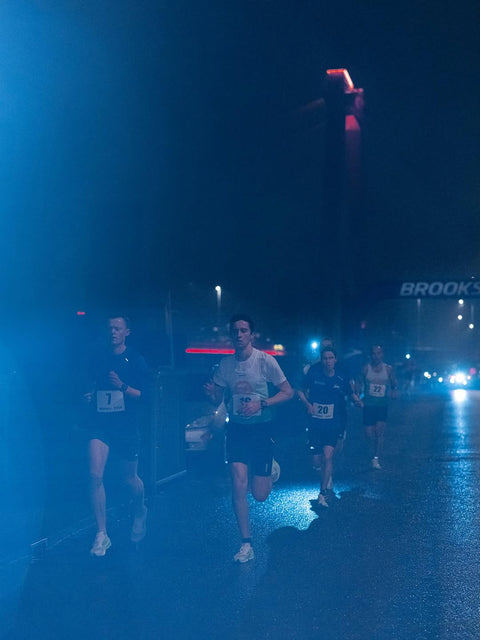
Illustrative context image: the watch does not show a readable measurement. The photograph cannot establish pace, training zone or recovery status.
Take your Nordic curl from the first rep to week 10.
A concrete 7-page plan: build up week by week, without pushing too fast.
- 01A clear week-by-week progression
- 02Technique and the mistakes to avoid
- 03A simple log you will actually use

≤ 51%
✓Backed by research
Van Dyk et al., 2019: meta-analysis of programmes with NHE. Not an effect test of Nordbelt or this protocol.
Open the download page again or check the email we sent you.
Open the download page ↗Does a separate Nordic exercise fit your plan?
Planning a long run does not require buying strength-training equipment. If you separately choose bilateral Nordic curls at home, Nordbelt offers a setup with fixed ankle support without a training partner or large machine. A suitable, checked anchor point remains necessary. The aid does not determine your long-run distance or pace and does not automatically make you ready for a marathon.
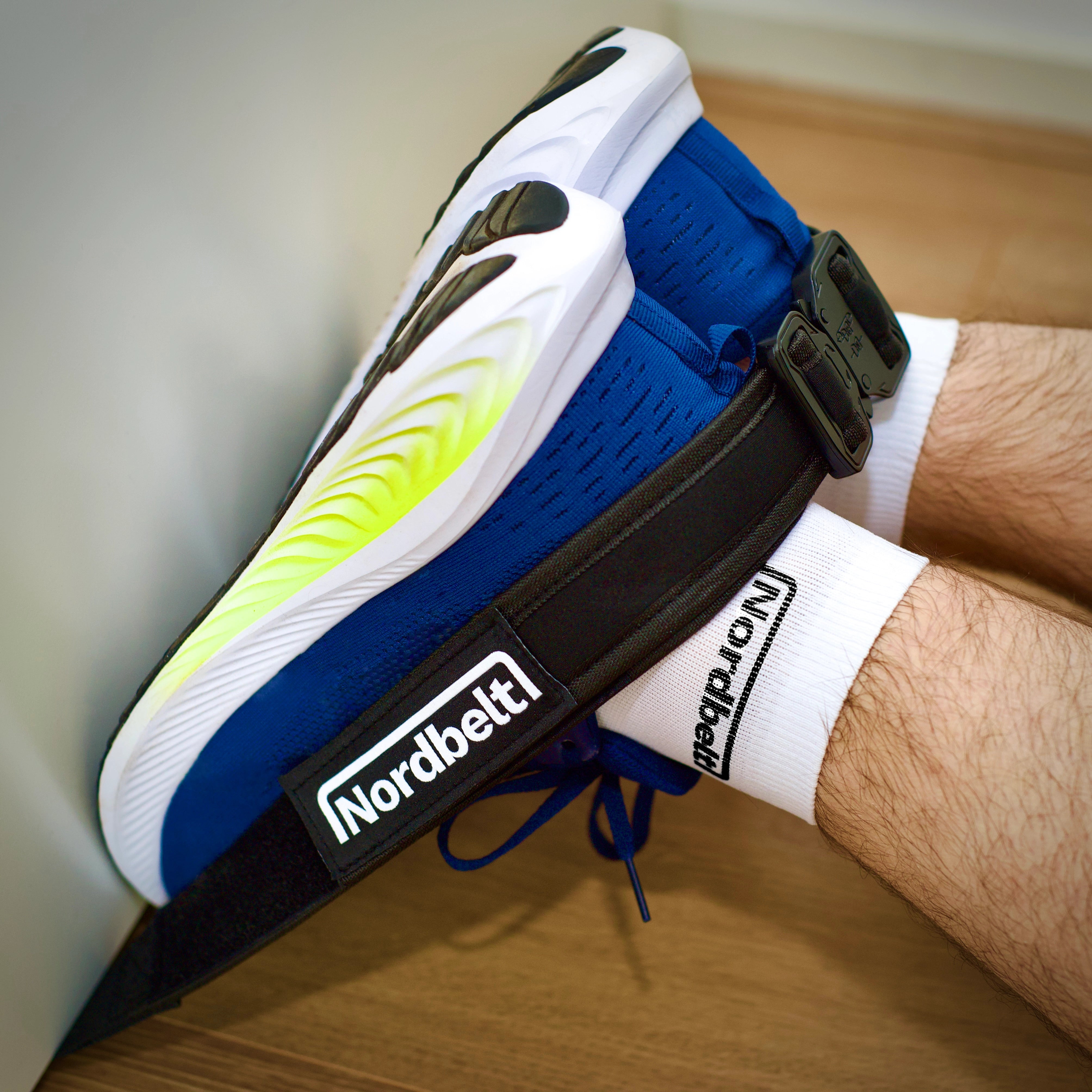
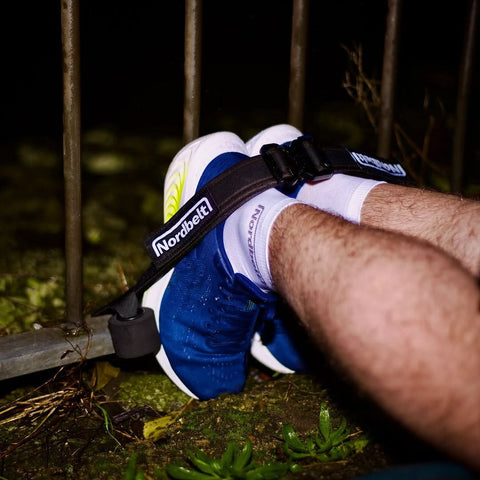
Equipment detail: only the ankle straps and shoes are visible, rather than a complete Nordic curl. For the role of existing strength work in your running block, see strength training during marathon preparation.
Two examples of reviewing your decision
The following situations are fictional examples. They demonstrate a choice, not a tested programme, customer result or guaranteed improvement.
Sanne has an easy long run in her plan. Converting the chosen distance to time shows that it would last considerably longer than her recent sessions. She discusses the running time while keeping the easy-running task intact. She does not try to erase the difference by running faster. Her log explains why the session was adjusted, making a later comparison more meaningful.
Koen has a defined pace segment within his existing plan. He records its duration separately from the whole run. Afterwards, he compares the planned and actual session, how demanding it felt and how the next familiar workout went. A disappointing session prompts a discussion of what changed; it does not prove that he needs more kilometres from now on.
Frequently asked questions
Does my longest run need to be 32 kilometres?
The evidence discussed does not establish one distance for every runner. Fokkema's research describes associations between self-reported training and outcomes; it did not test a mandatory 32-kilometre programme. Assess distance alongside running time, recent training and the session's purpose. An association in a group is not an individual prescription (Fokkema et al., 2020).
Can I run for time rather than kilometres?
Yes, a duration can clarify the task if it fits your existing plan. Record distance and conditions too, so you can review the session later. The 24-kilometre calculation above only illustrates why the same distance can involve a different amount of time. It does not prove that one duration is better for everyone.
Should a long run be at marathon pace?
That depends on the session described. Easy endurance running and a specifically planned pace segment have different tasks. Do not assume that every kilometre must match your race ambition. If the plan lists only a distance, first clarify the intended effort with your coach instead of adding a demanding pace workout yourself.
What if the run feels much harder than expected?
Record what actually changed: duration, effort, route, conditions or the preceding training. Treat perceived effort as additional information without automatically deriving a new mileage limit from it. The small study involving seven runners supports recording effort, rather than diagnosis or self-directed recovery advice (Manzi et al., 2015).
Where can I find exercises to do alongside running?
Choose them for a separate training goal and your existing experience. The hamstring exercises for runners guide discusses exercise choices; the marathon strength guide considers their place in different phases. An extra exercise is not required to make this long-run decision. Do not automatically add a demanding new programme because you are preparing for a longer distance.