

Train legs at home without equipment: 8 exercises and plan


Training legs at home without equipment works when you divide the session across knee-dominant strength, hip extension, single-leg control and hamstring work. You do not need a rack, machines or dumbbells to make progress. Start with a chair squat, split squat, reverse lunge, wall sit, hip hinge, glute bridge, hamstring walk-out and calf raise. Train two or three times per week and progress first through cleaner technique, more repetitions, slower tempo or a larger range of motion before choosing a harder variation.
Quick overview
Home leg training without equipment is still strength training. You can raise the stimulus by moving deeper, lowering more slowly, pausing at the bottom, using one-leg variations or shortening rest while technique stays clean. Squats and lunges load the ankle, knee and hip together, so stance, depth and trunk angle change where the work goes (Schoenfeld, 2010). For glutes, single-leg squat, single-leg deadlift and hip abduction can create high gluteal activation (DiStefano et al., 2009).
The most common mistake is treating a home leg session like a random burn-out circuit. Fatigue alone is not the goal. You want repeatable reps, clear joint positions and a progression you can measure. If the knee caves in, the heel lifts, the pelvis twists or the lower back takes over, make the exercise simpler and rebuild from there.

Leg exercises at home without equipment
Use exercises that you can repeat cleanly: chair squat, split squat, reverse lunge, wall sit, hip hinge, glute bridge, hamstring walk-out and calf raise. Do not try to make every set brutal. Four to five exercises per session is enough for most beginners. A good session has one squat pattern, one lunge or split-squat pattern, one hip-extension drill, one hamstring drill and optionally one calf drill.
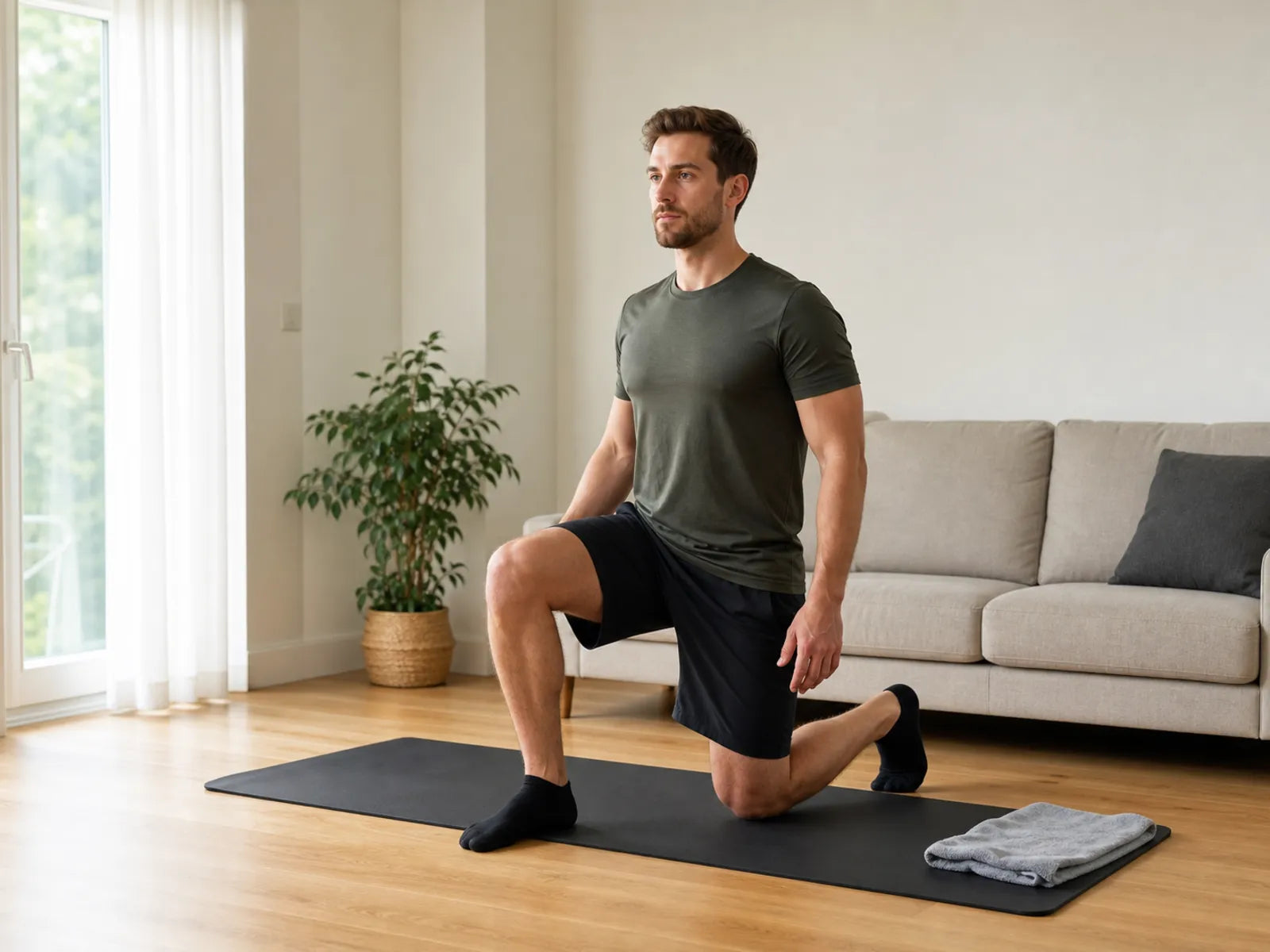
If your goal is more glute focus, use the related guide on training glutes at home. If you want a hamstring-specific plan, continue with the home hamstring exercise schedule. This page stays broader: quads, glutes, hamstrings, calves and a simple no-equipment structure.
Strength training legs at home
Strength training at home should be progressive. Resistance-training guidance is built around variables such as volume, intensity, exercise choice, rest and frequency (Ratamess et al., 2009). Without machines or weights, adjust those variables with more repetitions, a slower lowering phase, a pause, a larger range of motion, a harder variation or slightly shorter rest. Stop a set when control breaks rather than chasing failure.
A simple rule: progress only one variable at a time. If you add a pause, do not also add many more reps and shorter rest in the same week. If you move from a reverse lunge to a split squat, keep the volume modest for the first session. This keeps soreness manageable and makes it easier to see which change actually helped.
Take your Nordic curl from the first rep to week 10.
A concrete 7-page plan: build up week by week, without pushing too fast.
- 01A clear week-by-week progression
- 02Technique and the mistakes to avoid
- 03A simple log you will actually use

≤51%
✓Backed by research
Van Dyk et al., 2019: meta-analysis of programmes with NHE. Not an effect test of Nordbelt or this protocol.
Open the download page again or check the email we sent you.
Open the download page ↗Making legs stronger at home
Pick a baseline: clean chair-squat reps, a wall-sit hold and a glute-bridge hold. Retest every two weeks. In week one, learn the movement with two sets. In week two, move the main exercises to three sets. In week three, slow the lowering phase or add a short pause. In week four, replace one drill with a single-leg option. Calm progression beats random high-volume sessions.
Keep the effort honest but controlled. Most home athletes do well with two good reps left in reserve on the first sets and one good rep left in reserve on the final set. Beginners should avoid repeated sets to complete failure because technique usually changes before the target muscle is truly the limiting factor.
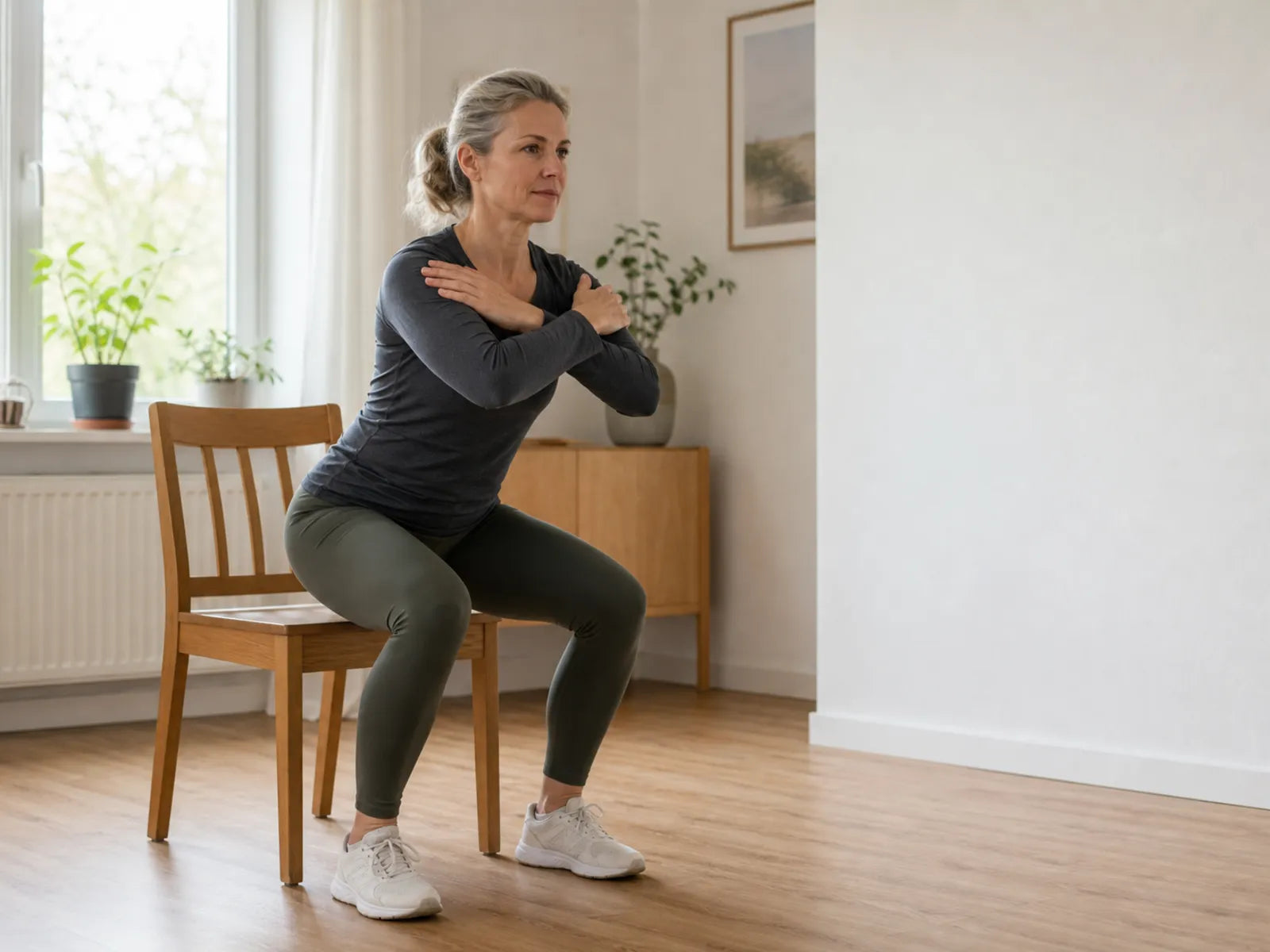
Beginner home leg workout
- Chair squat: 2 to 3 sets of 8 to 12 reps.
- Reverse lunge: 2 sets of 6 to 10 each side.
- Glute bridge: 2 to 3 sets of 10 to 15 reps.
- Wall sit: 2 sets of 20 to 40 seconds.
- Calf raise: 2 sets of 12 to 20 reps.
- Hamstring walk-out: 1 to 2 calm sets of 4 to 8 reps.
Rest 45 to 90 seconds. Leave two good reps in reserve. If you also run, play football, train padel or lift in a gym, avoid placing this workout right after your hardest sports day. Put it after an easier day or use it as a controlled strength day between harder sport sessions.
Training hamstrings and glutes at home
Glute bridges, hip hinges and hamstring walk-outs connect general leg strength to posterior-chain control. Later you can add sliders, assisted Nordics or controlled Nordic hamstring curls. Eccentric hamstring work is well known from sports research; in one football study, added Nordic hamstring training reduced acute hamstring injuries (Petersen et al., 2011). That does not mean every beginner should start with full Nordics, but controlled hamstring strength is a logical next step.
During slider curls, your heels must remain free to slide across the floor. Nordbelt provides ankle fixation for supported Nordic curls. Check the anchor, knee padding and space for early hand support, and choose a progression you control. With pain or a recent injury, have suitability assessed first. Related guidance: Nordbelt how-to guide.
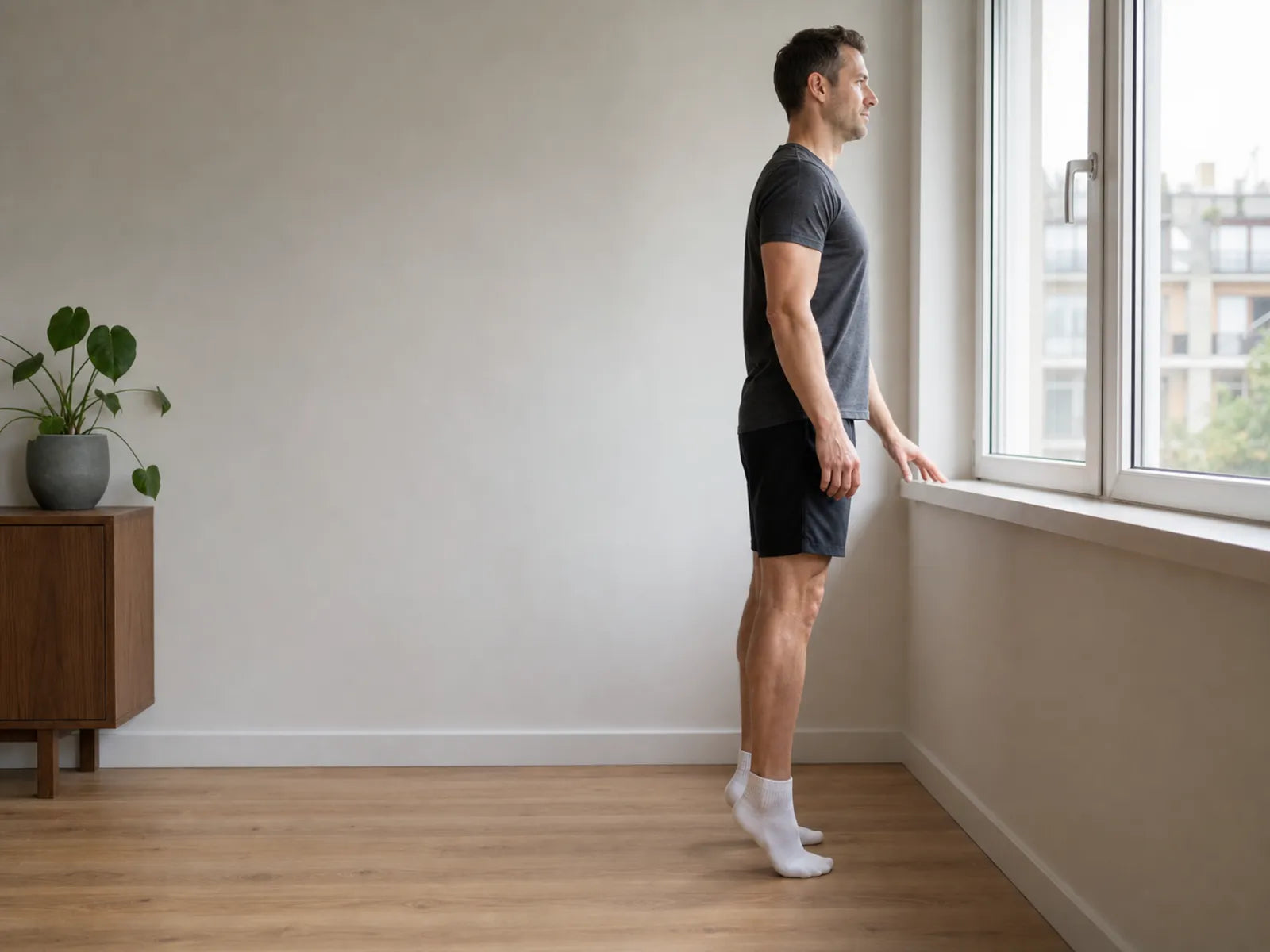
Three-week plan
Week 1: chair squat 2 x 10, glute bridge 2 x 12, reverse lunge 2 x 6 each side, wall sit 2 x 20 seconds and calf raise 2 x 15. Week 2: chair squat 3 x 10, split squat 2 x 8 each side, glute bridge 3 x 12, hip hinge 2 x 10 and wall sit 2 x 30 seconds. Week 3: paused squat 3 x 8, reverse lunge 3 x 8 each side, single-leg bridge hold 2 x 20 seconds each side, hamstring walk-out 2 x 6 and calf raise 3 x 15.
If the plan feels too easy, slow the lowering phase to three seconds before you add more exercises. If it feels too hard, reduce the range of motion, use a chair for balance or keep the lunge shallower. The plan should leave your legs trained, not ruined for the next two days.
FAQ
Can you train legs at home without equipment?
Yes. Use squats, lunges, split squats, glute bridges, hip hinges, wall sits, hamstring walk-outs and calf raises. Progress through tempo, range, repetitions and one-leg variations.
Which home leg workout is best for beginners?
A beginner session should use controlled exercises without jumping: chair squat, reverse lunge, glute bridge, wall sit and calf raise. Add harder hamstring or single-leg work once balance stays steady.
How often should you train legs at home?
Two or three sessions per week is a good starting point. Keep at least one rest day between harder leg sessions and adjust around sport or running.
How do you make bodyweight leg exercises harder?
Use slower lowering, a pause, deeper range of motion, single-leg variations, more repetitions or shorter rest. Change one variable at a time so technique stays readable.
Can no-equipment leg training help hamstrings?
Yes, but choose the right drills. Hip hinges, glute bridges and hamstring walk-outs are better hamstring starters than only squats. Add more specific hamstring progressions once control is solid.